
Bed bugs arrive in West Chester by airplane and interstate, not by neighborhood. This is a township of business travelers, corporate relocations moving through the Union Centre Boulevard corridor, families with kids coming home from college dormitories twice a year, and a dense cluster of hotels at the I-75 interchanges. Every one of those is a transport route, and a bed bug is completely indifferent to what a house is worth or how well it is kept. The single most useful thing to understand before you call anyone: this is not a housekeeping problem, and it never was.
The Delay That Costs the Most
There is a pattern specific to higher-income markets like this one, and it reliably costs people money. Bed bugs carry a stigma that has nothing to do with the biology, so the first response in a lot of households is to handle it quietly and privately — wash everything on hot, buy a mattress encasement, order something promising from a hardware store, and wait a couple of weeks to see whether it worked. That instinct is completely understandable and it is the single most expensive decision in the entire process.
Bed bugs reproduce on a timeline that punishes hesitation. A mated female lays a few eggs a day, steadily. Those eggs hatch in one to two weeks, and the nymphs reach breeding maturity in roughly a month under normal household conditions. So six weeks of privately trying things is not six weeks of harmless stalling. It is one to two additional generations, established in more rooms, spread further through the structure, and considerably more expensive to resolve than what you started with.
It also spreads the problem geographically inside the house, which is a particular issue with this housing stock. In a four-thousand-square-foot home with four or five bedrooms, a home office, a finished basement with a sectional, and a bonus room over the garage, an infestation that began in a guest room has an enormous number of places to migrate while somebody is still deciding whether this is really happening.
How They Actually Get Here
The dominant route in this township is travel. A bed bug or two rides home in a suitcase, a garment bag, or a laptop bag from a hotel room, and the first place that suitcase goes is a bedroom floor or a closet. Business travelers who fly weekly are simply exposed far more often than people who do not, and the corporate corridor here means a large share of households fit exactly that description. It has nothing to do with the quality of the hotel, either — four-star properties deal with this constantly.
The second route is the college return, and it is sharply seasonal. May and December bring dormitory and off-campus apartment contents home in bulk: mattresses, upholstered chairs, bedding, throw pillows, and boxes that have been sitting against a shared wall for an entire semester. All of that typically goes straight into a bedroom or down to a basement, and by the time anyone notices anything, it has had several undisturbed weeks to establish.
The third is secondhand and delivered furniture. Estate sales, marketplace pickups, consignment finds, and occasionally furniture deliveries where the truck was also carrying a return from an infested home. This route surprises people because the item in question can be genuinely expensive and beautiful and still be a vector. Price is not a filter. Bed bugs do not know what anything cost.
- Luggage from travel — the leading route in this township by a wide margin, and unrelated to hotel quality.
- College move-outs in May and December, arriving as an entire room of furniture at once.
- Secondhand and marketplace furniture, including high-end pieces and estate-sale finds.
- Guest-room transmission from visiting family, usually discovered several weeks after they have gone home.
- Delivery returns on upholstered goods — uncommon, but a genuine route.
Reading the Evidence in a Large House
Bites are the least reliable indicator there is. Roughly a third of people show no visible reaction to bed bug bites at all, reactions vary enormously between members of the same household, and a bite pattern on its own is not diagnostic of anything. In a large house this creates a specific confusion: the person who is reacting may not be the person sleeping in the affected room, and the room everyone suspects may not be the room involved.
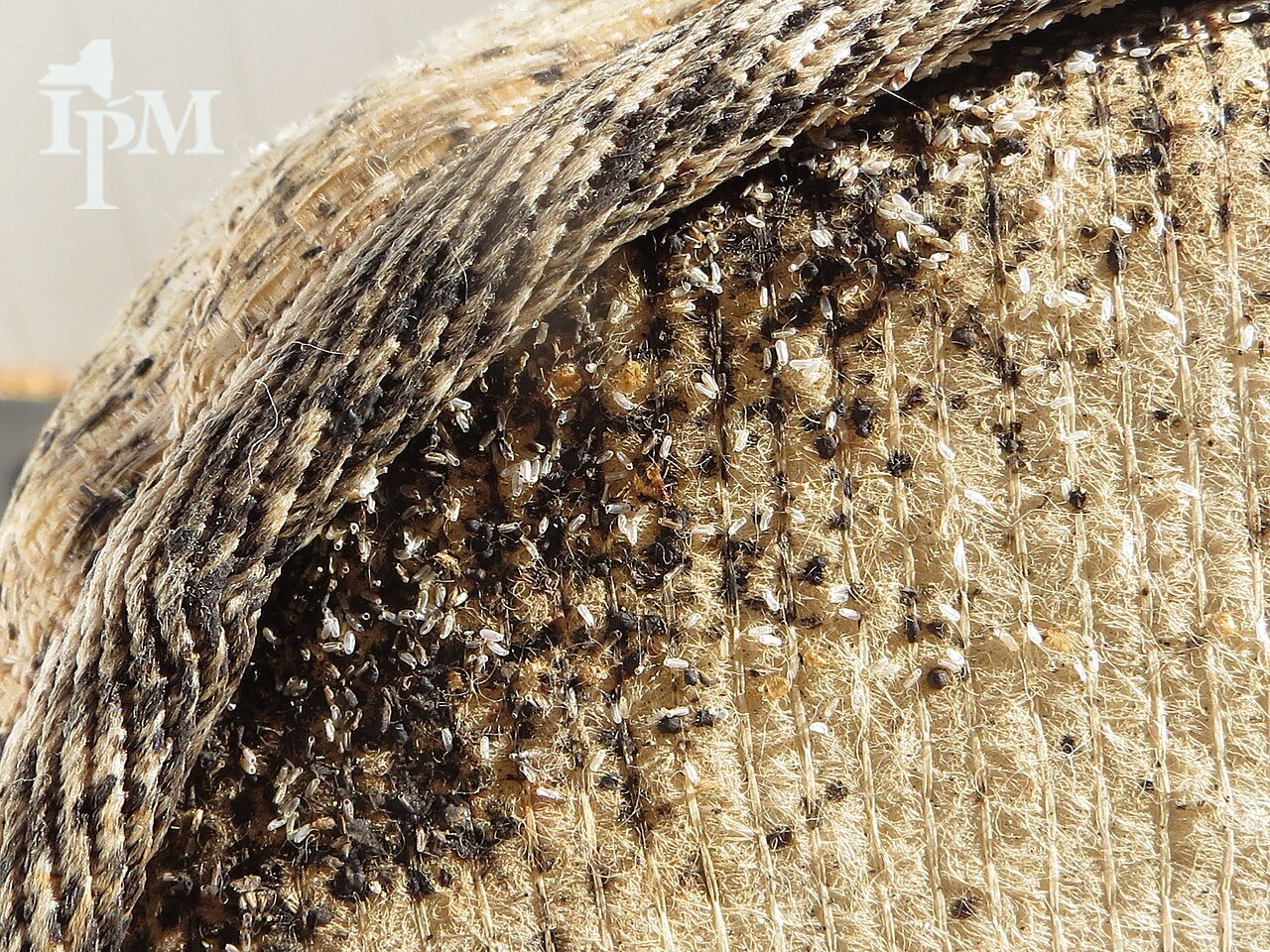
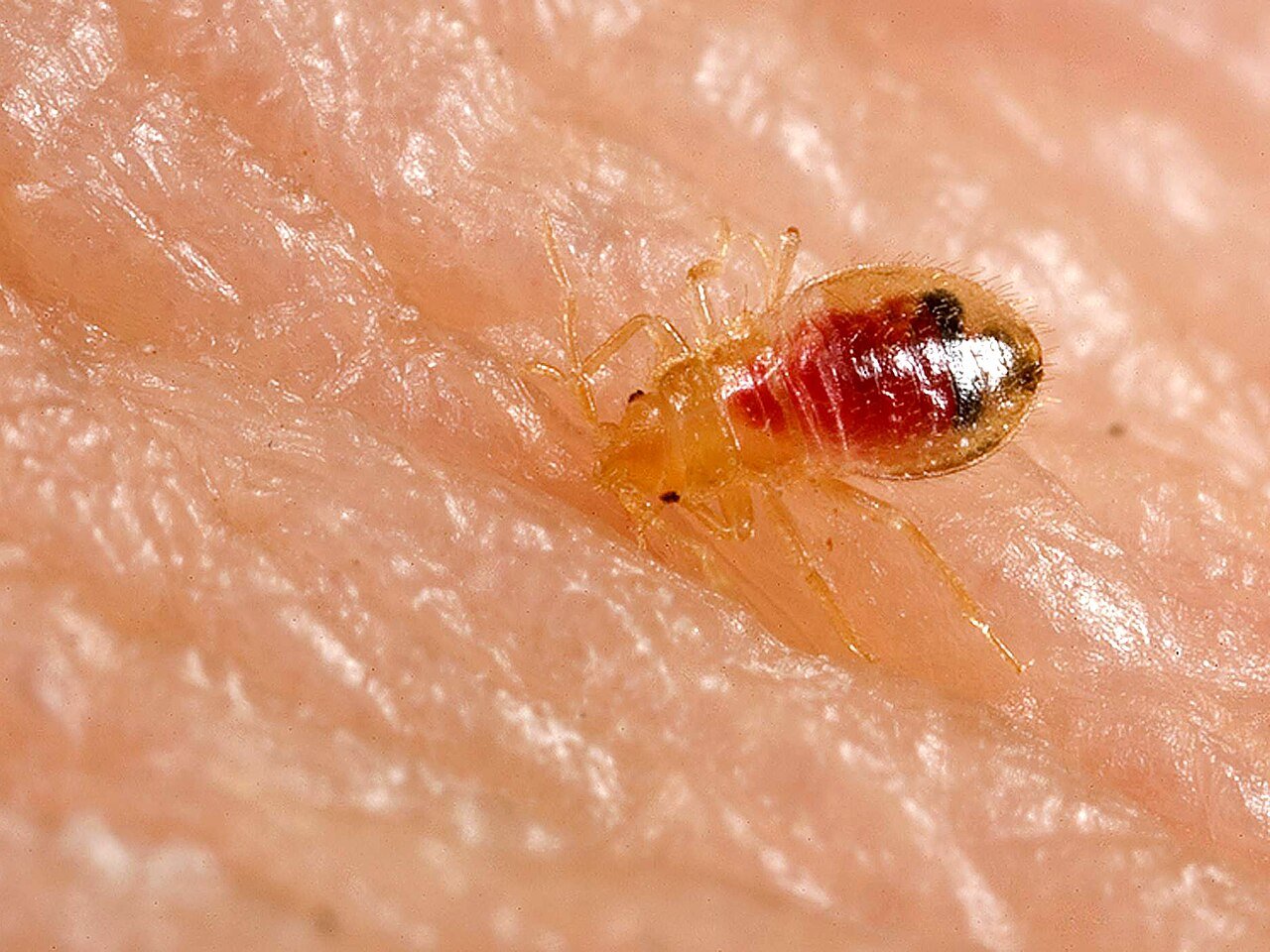
The physical evidence is what actually matters. Small dark spotting along a mattress seam, on the tape edge of a box spring, or on the underside of a headboard is digested blood, and it is the most common first finding by a considerable margin. Shed skins — translucent, hollow versions of the insect at each growth stage — accumulate near harborage sites. Live insects hide in seams, in screw holes, and in the gap where a headboard bolts to a bed frame, not out in the open where you would happen to see them.
In this particular housing stock we also check upholstered furniture in finished basements and bonus rooms as a matter of course, because a sectional that regularly gets slept on during a football game is a completely legitimate harborage site. It is very frequently the room nobody thought to mention on the phone.
Treatment That Fits the House
Effective bed bug work in a house this size is a program rather than a single visit, and anyone promising otherwise is either misinformed or selling something. It combines thorough treatment of the harborage sites with follow-up visits deliberately timed against the egg cycle. Eggs are the resistant stage — anything that reliably kills adults and nymphs on contact will not reliably kill eggs, and eggs hatching a week or two later would simply restart the whole problem if nobody came back.
Preparation genuinely matters, and we will give you a specific written list rather than a vague instruction to declutter and hope. What we will not do is tell you to throw out your mattresses and furniture as a first step. In the overwhelming majority of cases that is unnecessary, expensive, and occasionally actively counterproductive, because carrying an infested item through the house and out to the curb spreads insects along the entire route it travels.
Discretion is part of the job here, and we treat it that way. Unmarked scheduling is available, and we are well aware that in a subdivision where neighbors know each other, a marked truck sitting in a driveway is information that travels. That should never be the reason somebody puts off making the call for another month.
Across the Lakota Corridor
Liberty Township shares the same travel-driven pattern and the same large-home layouts, so the work looks nearly identical there. Fairfield is next door to the west with older stock, and Mason is just across the Warren County line.
General service in the township is on the West Chester pest control page.
Frequently asked questions
Does having bed bugs mean my house is dirty?
No, and this is the single most damaging myth about them. Bed bugs feed on blood and travel on belongings. Spotless homes get them and cluttered homes get them; clutter only makes treatment harder by adding hiding places. Nothing about an infestation reflects on your housekeeping.
How did they get into my house?
In West Chester the leading route is luggage from travel, followed by college move-outs in May and December, then secondhand or marketplace furniture. Price is not protective — an expensive estate-sale piece carries them exactly as well as a cheap one does.
Can I treat it myself first?
You can, and it usually costs considerably more in the end. Bed bugs go from egg to breeding adult in roughly a month, so six weeks of store-bought products is one to two extra generations spread through more of the house. Over-the-counter sprays also tend to scatter them into rooms that were previously clear.
Do I have to throw out my mattress and furniture?
Almost never, and we do not lead with it. Discarding is occasionally warranted for an item that is genuinely destroyed, but in most cases it is unnecessary expense — and carrying an infested piece through the house to the curb can spread the problem along the entire route it travels.
I do not have any bites. Can I still have them?
Yes. About a third of people show no visible reaction at all, and reactions differ sharply between household members. That is exactly why we look for physical evidence — dark spotting on mattress seams and box spring tape, shed skins, and live insects in seams and screw holes — rather than relying on bites.
Why does it take more than one visit?
Eggs are the resistant stage. Treatment that kills adults and nymphs will not reliably kill eggs, and eggs hatching a week or two later would restart the infestation. Follow-up visits are timed deliberately against that cycle, and that timing is what actually ends it.
Can you come discreetly?
Yes. Unmarked scheduling is available, and we are conscious that in a subdivision a marked truck in the driveway is information. Nobody should be delaying a call over that.
My child is coming home from college. What should I do?
Unload into the garage rather than straight into a bedroom, inspect mattresses, upholstered items, and the seams of anything soft before it comes inside, and run everything washable through a hot dryer cycle. That one habit prevents a large share of the cases we see every May and December.