
Tiny flying bugs in the house sort into exactly five suspects, and every one of them confesses under the same two questions: WHERE do they hover, and what do they LOOK like at arm’s length? The five — fruit flies, fungus gnats, drain flies, phorid flies, and the seasonal wildcard (winged ant and termite swarmers) — each ties to a different source, and the source is always the real problem: ferment, wet soil, drain film, hidden decay, or a colony announcing itself. This page is the unified small-flier tribunal: the five-way identification bench, the venue map that usually convicts before the magnifier arrives, the source-fix for each verdict (every one already detailed in its own wing of this library), and the one-week protocol that clears any tiny-flier mystery or escalates it correctly.
The five-way bench: look and venue, cross-referenced
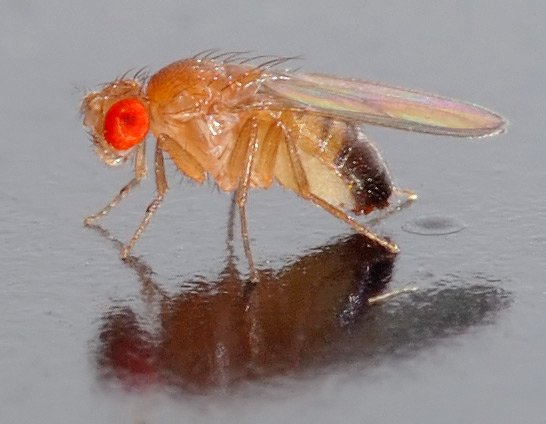
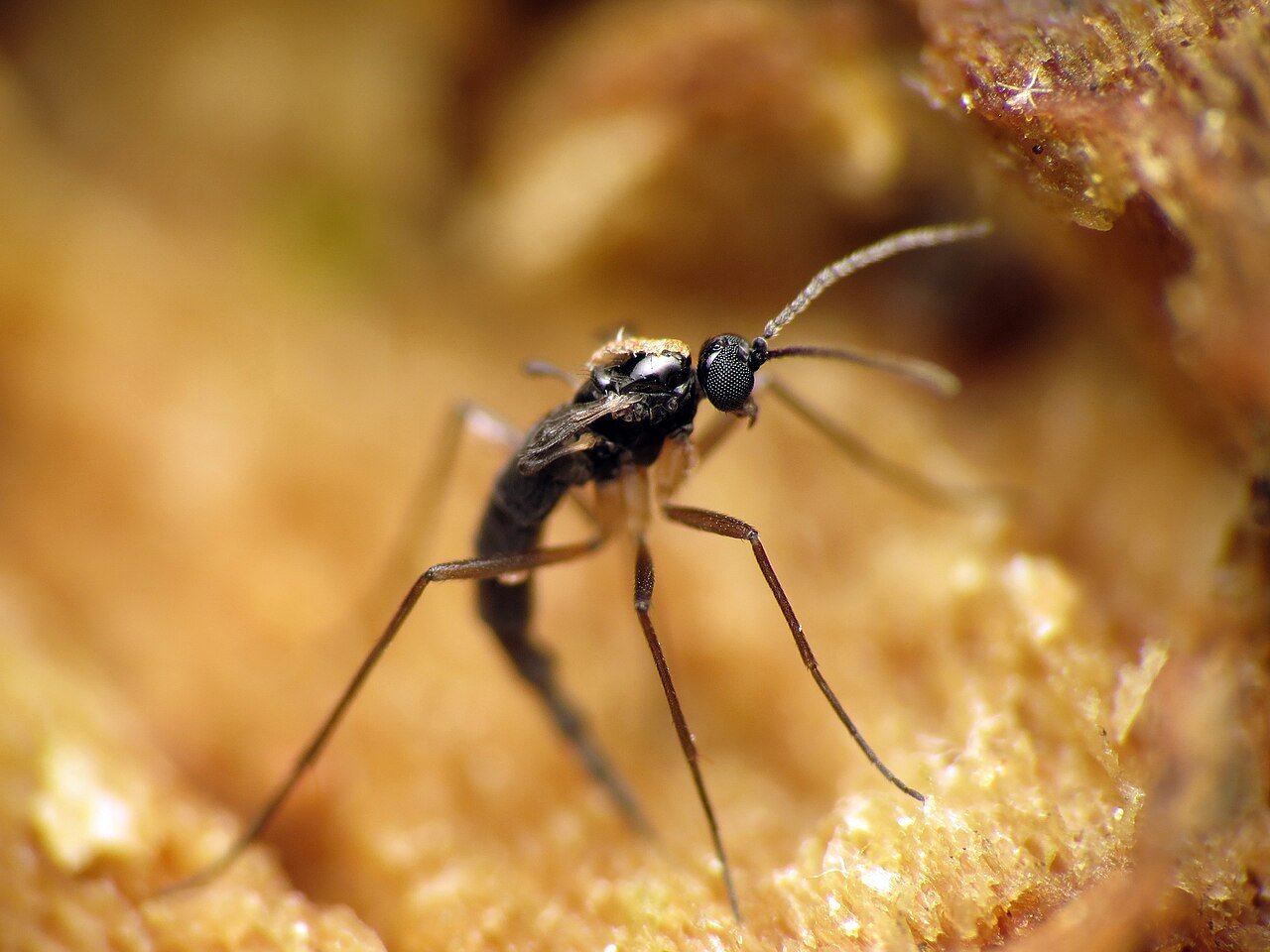
Fruit flies: tan-bodied, famously red-eyed, rounded — hovering at produce bowls, recycling bins, and wine glasses; the ferment specialists whose vinegar-trap-and-source-purge program runs on their page. Fungus gnats: the photo below’s build — dark, delicate, long-legged, mosquito-like in miniature — drifting weakly around HOUSEPLANTS and windows; wet potting soil is their entire biography, and the dry-out cure their entire treatment. Drain flies: fuzzy, moth-winged, terrible fliers found RESTING on bathroom and kitchen walls near their namesake; the tape-test-and-brush protocol on their page. Phorid flies: the humpbacked SPRINTERS — they run across counters in bursts before flying; the one small flier that escalates, since established populations flag hidden decay and plumbing breaches per their page’s red-flag file. The swarmer wildcard: a sudden one-day indoor cloud of larger winged insects is no fly at all — the ant-versus-termite tribunal takes that case immediately, waist-antennae-wings, with the stakes the termite pages have priced. Two questions, five verdicts, and the venue almost always answers first: produce, plants, drains, everywhere-fast, or all-at-once.
Identifying the fly is most of the fix. When the source turns out to be in the building rather than a houseplant, our pest control in Dayton covers finding it.
The source doctrine: why swatting never ends a tiny-flier problem
All five suspects share one economic fact: the adults you see are the advertising, not the enterprise. Each species’ population lives as eggs and larvae in its source — the fermenting peach, the soggy pot, the drain’s gel film, the hidden decay — and adult lifespans measured in days-to-weeks mean the visible cloud replaces itself continuously from the nursery while swatting, spraying, and zapping harvest only the surplus. The corollary powers every program in the small-flier wing: find and fix the source, and the cloud ages out within one adult lifespan — typically a week — with no product required; skip the source, and no amount of adult-killing changes the arithmetic. It also explains the diagnostic gift these species offer: because each nursery is specific, the FLY IDENTIFIES THE PROBLEM — fruit flies audit your produce handling, fungus gnats your watering schedule, drain flies your plumbing film, phorids your hidden moisture failures. The tiny fliers are less pest than inspection report with wings; this page teaches you to read it.
The verdict-to-fix table
- Fruit flies convicted: the ferment purge — produce to the fridge, recycling rinsed, drips found; vinegar-soap traps mop up the survivors. Full program: the fruit fly page. Clear in 3–5 days.
- Fungus gnats convicted: the dry-out — top two inches of every pot bone-dry between waterings, saucers emptied, yellow sticky cards for the adults; BTI drench for the stubborn pot. Full program: the gnats page. Clear in 1–2 weeks.
- Drain flies convicted: the tape test names the drain, the brush-and-enzyme scrub ends the film, monthly maintenance holds it. Full program: the drain fly page. Clear in days.
- Phorids convicted: the escalation — source-hunt seriously (trash, disposal, then the hidden files: dead animal in a void, plumbing breach under slab); persistent no-source phorids are the professional investigation this wing flags hardest. Their page carries the red-flag list.
- Swarmers convicted: the tribunal — ant marks earn a census shrug or the carpenter follow-up; termite marks earn the same-week inspection. The flying-ant and termite pages take over immediately.
- Nothing convicted after a week: widen the search — overlooked venues (the potato bin, the gym-bag orange, the unused bathroom’s drain, the overwatered office plant) hide most holdout sources; the photo line arbitrates the true mysteries free.
The one-week protocol, start to finish
Day one: identify by look-and-venue (or photo the specimen against white paper — a phone macro of a tiny flier is usually definitive) and start the matching fix from the table. Days two through four: run the fix WITHOUT adult-killing theatrics — the cloud’s persistence is expected (adults age out on their own schedule), and the metric that matters is NEW emergence: sticky cards near the suspected source, refreshed daily, tell the trend honestly. Day five through seven: trends down = hold course to zero; trends flat = wrong source or second source — re-run the bench (multiple species co-occur more often than people expect: the fruit-fly-plus-fungus-gnat kitchen is a classic double). Day eight, if needed: escalate by species — phorid persistence to the professional investigation, swarmer events to their tribunals, and genuine unsolved mysteries to (937) 569-3330, where tiny-flier photos are a daily specialty and the source-hunt is the actual job. One week, one protocol, five suspects — and a kitchen that reads its own inspection reports from now on.
The seasonal patterns behind the mysteries
Tiny-flier season has structure worth knowing. Summer belongs to fruit flies — peak produce, peak ferment, egg-to-adult cycles running barely over a week in kitchen warmth; July-through-September supplies most of the vinegar-trap traffic. Fall pivots indoors: the October houseplant migration (pots coming in for winter) imports fungus gnat populations wholesale — the single most predictable tiny-flier event on the calendar, prevented by the pre-migration dry-out and repotting checks the gnats page details — while late produce and cider season extend the fruit-fly file. Winter is the diagnostic season: outdoor sources are dead, so ANY persistent tiny flier points indoors with unusual precision — the overwatered plant, the neglected drain, the phorid’s hidden source — and winter mysteries resolve faster precisely because the suspect list shrinks. Spring brings the swarmer wildcard — the ant and termite flights whose tribunal outranks everything else on this page for stakes — plus the first drain-fly blooms as temperatures wake the film. Read the calendar alongside the venue and the bench gets faster still: the season names the likely suspect before the first specimen lands on the white paper.
The eight-county tiny-flier report
Local texture from the photo line: the urban cores and river towns lead on drain-fly and phorid files — older plumbing, basement drains, and the occasional slab-leak discovery that makes the phorid page’s red-flag list earn its keep; the plant-heavy suburbs (Kettering, Centerville, Beavercreek’s garden-club belts) dominate October’s fungus-gnat migration wave; fruit-fly season runs uniformly everywhere kitchens do; and the farm counties add the September cider-press and produce-stand variants plus the grain-adjacent stored-product moths that occasionally crash this tribunal (larger, fluttering, pantry-tied — the pantry-moth page’s clients, not this one’s). The swarmer wildcard files from every county each spring, and the winter-mystery specialty — the January tiny flier with the shrunken suspect list — remains the line’s favorite quick win regardless of zip code.
Frequently asked questions
What are the tiny flying bugs in my house?
One of five suspects, convicted by look and venue: fruit flies (red-eyed, at produce), fungus gnats (dark and delicate, at houseplants), drain flies (fuzzy, resting on bathroom walls), phorid flies (humpbacked sprinters, anywhere — the escalation case), or a one-day swarmer event (the ant-versus-termite tribunal). The bench on this page sorts them in a minute.
How do I get rid of tiny flying bugs fast?
Fix the source, not the cloud — each species’ population lives as larvae in its nursery (ferment, wet soil, drain film, hidden decay), and adults age out within about a week once it closes. The verdict-to-fix table matches each suspect to its program; swatting and zapping only harvest the surplus.
What are the tiny flying bugs that aren’t fruit flies?
Run the venue check: hovering at plants = fungus gnats (dry the soil); resting fuzzy on walls = drain flies (scrub the film); sprinting across counters before flying = phorid flies (source-hunt seriously). Red eyes and produce-hovering are the fruit fly’s own signature.
Why do tiny flies keep coming back after I clean?
A missed or second source — the gym-bag orange, the unused bathroom’s dry drain, the overwatered pot, the disposal splash zone — or a co-occurring second species (the fruit-fly-plus-fungus-gnat kitchen is the classic double). Sticky-card trends near suspects find the holdout within days.
What are the tiny black flying bugs around my houseplants?
Fungus gnats — wet-potting-soil specialists whose larvae eat soil fungus. The cure is the watering schedule: top two inches bone-dry between waterings, saucers emptied, yellow cards for adults, BTI drench for stubborn pots. Full program on the gnats page.
Are tiny flying bugs in the house harmful?
The household five are nuisance-and-sanitation files, not dangers — with one asterisk: established phorid flies flag hidden decay or plumbing breaches worth taking seriously (their page’s red-flag list), and sudden swarmer clouds warrant the termite check. Everything else is a source-fix and a week.
What kills tiny flying bugs in the house?
Time, once the source closes — adults live days, and no replacement generation means no cloud. Supporting tools by species: vinegar-soap traps (fruit flies), sticky cards (gnats), enzyme scrubs (drain flies); foggers and sprays remain the wing’s standing F.
Why are there tiny flies in my house in winter?
Winter shrinks the suspect list to indoor sources — the overwatered plant, the neglected drain, the phorid’s hidden file — which makes cold-season mysteries the fastest to solve. Persistent winter phorids especially deserve the source investigation.
What are the tiny flying bugs that appeared all at once?
A swarmer event, not a fly problem — ant or termite reproductives emerging on their annual flight. Run the tribunal immediately (pinched waist and unequal wings = ant; straight body and equal wings = termite and a same-week inspection) per the flying-ant guide.
When should tiny flying bugs prompt a professional call?
Phorid persistence after an honest source-hunt (hidden decay and plumbing breaches are genuinely our specialty), any termite-verdict swarmer event, and the true unsolved mysteries after the one-week protocol: (937) 569-3330 — tiny-flier photos against white paper are a daily specialty of the free ID line.
The macro-photo trick: turning any phone into the tribunal’s microscope
The bench’s secret weapon deserves its paragraph, because it converts every ambiguous speck into an identifiable specimen. The method: coax or swat the flier onto WHITE PAPER (contrast is everything at this scale), steady the phone two inches away, tap-to-focus on the body, and shoot several frames — modern phone cameras resolve red eyes, humpbacks, fuzzy wings, and antennae shapes that naked eyes cannot, and the difference between “some gnat” and a named suspect is usually one sharp frame. Reading the frame: red eyes and rounded tan body = fruit fly; long dangling legs and slender dark build = fungus gnat; wings held roof-like and furry = drain fly; humped thorax with the head tucked low = phorid; and anything with a visible WAIST is the swarmer tribunal’s case, not a fly at all. The same frame that answers your question feeds the free line if doubt survives — a white-paper macro is the single most useful submission our photo triage receives, tiny-flier division, and it turns the wing’s five programs into a self-service diagnosis for anyone with a counter and a camera. Specimen, paper, frame, verdict: the whole tribunal, pocket-sized.
Five suspects, one bench, a week’s patience, and a phone-camera microscope — the tiny-flier mystery, permanently demoted from recurring annoyance to solved genre. The sources close, the clouds age out, and the kitchen goes back to reporting nothing at all — which was always the correct answer.