
“What does a flea look like?” gets asked with a speck on a fingertip, a pepper grain from the dog’s brush, or a fast dark dot that vanished before the eye could commit — and the honest answer starts with scale: at one-to-three millimeters, a flea sits at the edge of what unaided eyes identify, which is why every flea ID is really a combination of look, movement, and context. This page assembles all three: the magnified anatomy that makes fleas unmistakable once seen properly, the naked-eye version (what a flea actually looks like ON a pet, in carpet, on a sock), the life stages nobody recognizes (eggs, larvae, and the invisible pupae), the look-alike lineup that fills our photo line — springtails above all — and the confirm-it-tonight tests that settle the question without a microscope. By the end, the speck has a name either way.
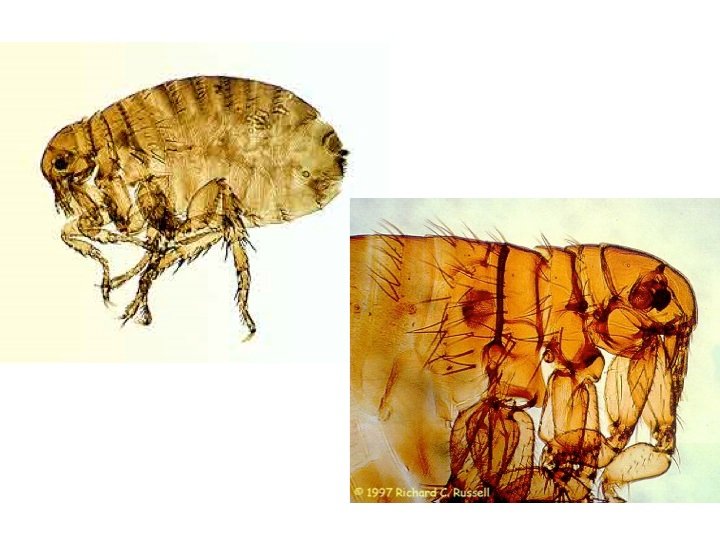
The magnified truth: anatomy of the jump machine
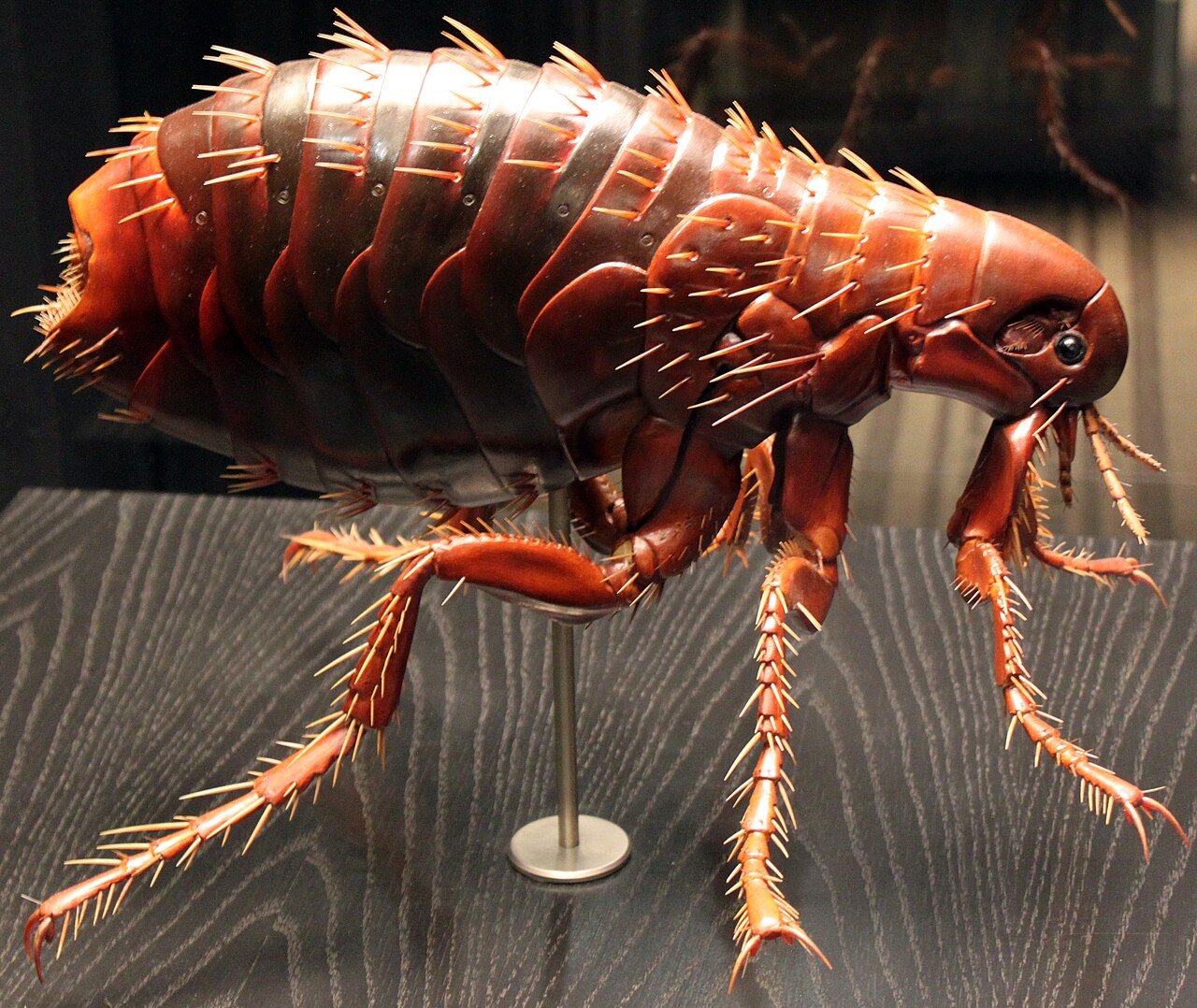
Under any magnification — a phone macro lens does it — the flea resolves into one of nature’s most committed designs: a body flattened side-to-side (tall and thin like a coin on edge — the fur-slicing shape no look-alike shares), mahogany-to-dark brown and glossy, armored in overlapping plates, with backward-facing bristles and combs (the genal and pronotal ctenidia — the “mustache” rows that grip fur against grooming), a small head carrying piercing mouthparts tucked beneath, no wings whatsoever, and the signature: massively oversized hind legs, the spring-loaded levers behind the fifty-times-body-length jumps our flea-bite page documents. Six legs, no antennae worth seeing, no waist — the profile in the photo above is the entire identification, and once seen it cannot be unseen: nothing else in a house is shaped like a flea.
By the time you can see one, the carpet is already carrying the rest. Clearing that is flea treatment in Dayton.
The naked-eye version: what you actually see
At real-world distance a flea is a dark, glossy, seed-shaped speck that MOVES WRONG: appearing suddenly, gone in a blink, covering impossible distance without visible travel — the teleporting dot experience that no beetle, mite, or gnat reproduces. On a pet: a fast slider between hairs at the fur base, most visible on pale bellies and inner thighs, diving from light as the coat parts — often the motion is all you get, which is why the flea comb (below) outperforms eyes. In carpet or bedding: a speck that vanishes on approach; on white socks: the black dot that appears mid-shin and is gone — the sock test’s whole mechanism. Squeezed between fingers: a flea is armored — it survives pinching that would end any gnat, and the classic confirmation is the resistance itself plus the sideways-flat body rolling under the fingertip. Color note: fed fleas run darker and slightly swollen; newly emerged ones can look almost black. If your speck is tan, gray, fuzzy, or slow, the lineup section below has its real name.
The stages nobody recognizes: egg, larva, pupa
The adult is five percent of the population; the other ninety-five wears disguises. Eggs: pinhead white ovals (half a millimeter), smooth and glossy — laid in fur but built to FALL OFF, salting pet bedding and carpet like fine dandruff that ROLLS when nudged rather than flaking. Finding them: a white towel where the pet sleeps for two days becomes a collection tray. Larvae: the stage that shocks people — quarter-inch, legless, translucent-to-cream bristled threads that writhe away from light at carpet-base level, in cushion seams, and in bedding folds, eating the flea dirt raining from above (visible as a dark gut line through the pale body — the diagnostic detail). They look nothing like their parents; every “tiny worms in the carpet” call is this stage or carpet-beetle larvae, and the bristly-writhing-versus-fuzzy-trundling distinction sorts them. Pupae: functionally invisible — sticky silk cocoons instantly coated in carpet dust, the treatment-proof stage behind the two-week tail every flea program honestly discloses. You will never identify a pupa in situ; you infer them from the calendar, which is precisely why the guides keep saying so.
The look-alike lineup: the specks that are not fleas
- Springtails (the number-one impostor): similar size, dark, and they JUMP — but via tail-spring (a tumbling pop, not the flea’s clean vertical), in DAMP venues (sinks, plant pots, basement floors), and they never bite. Moisture-clustered jumpers with zero bites = springtails; the full file is one page away.
- Flea beetles: garden jumpers that occasionally ride in on produce — rounder, often metallic, leaf-eaters that ignore animals entirely.
- Bat bugs and bed bug nymphs: flat but WIDE (dorsally flattened — pancake, not coin-on-edge), amber, slow crawlers of seams and voids; no jump in the family.
- Bird and rodent mites: smaller still, slower, and venue-tied to nests and infestations; bites without any jumping speck sighting points here.
- Pepper, seeds, and soil flecks: the wipe test — debris smears or slides; a flea resists, rolls, and then leaves. The armored escape IS the identification.
- “Flea dirt” itself: not an insect at all but the best evidence in the file — pepper grains that bloom rust-red on a wet white towel (digested blood). Dirt without visible fleas still convicts; the population math explains why.
Confirm it tonight: the three home tests
The flea comb (the gold standard): fine-toothed comb through the pet’s tail base and hindquarters over white paper — live fleas arrive combed out and sprinting (drop them in soapy water; they swim annoyingly well in plain), and the pepper-grain fallout takes the wet-towel test: rust-red bloom = flea dirt = confirmed, whether or not an adult showed. The white-sock shuffle: tall socks, ten minutes of slow walking in the suspect room — emerging adults print as moving black dots on white; two or more is a positive room. The lamp-and-dish trap: shallow soapy water under a desk lamp overnight in a dark room — warmth-and-light-drawn fleas jump in and stay; a morning count doubles as a severity index per room. Any single positive routes to the full program on our flea guides — and a persistent negative across all three tests, with bites continuing, sends the investigation to the bite-differential pages instead: the speck was never a flea, and the real culprit has its own chapter.
Do fleas look different on dogs vs. cats vs. people?
Same insect, three contexts. Ohio’s household flea is the cat flea regardless of host — the “dog flea” of search fame is the same species in practice (true dog fleas are rare here, and the distinction is microscope-grade head-comb trivia with zero treatment consequence). On cats: hardest to spot — dense coats and obsessive grooming remove evidence; overgroomed hind-end thinning plus comb-caught dirt outweighs sightings. On dogs: the belly, inner thighs, and tail base display best, especially on pale short coats; the scratch-triggered sudden-slide of a disturbed flea is the classic visual. On humans: never resident — per the bite page’s biology, a flea on a person is a fast transient: a dark speck landing mid-shin, biting or not, and leaping away; anything lingering, crawling slowly, or attaching is a different arthropod (the tick and mite pages take those cases). And the one search this section exists for: fleas in human hair are minutes-long accidents, not colonizations — persistent scalp company belongs to the lice conversation, a different insect and a school-nurse referral rather than a pest-control one.
The eight-county speck report
What the photo line teaches about local flea ID: pet-dense suburbs — Kettering, Beavercreek, Huber Heights — supply the classic comb-and-dirt confirmations each August-through-October peak; the rural counties add the no-pet mysteries where the speck turns out to be springtails in a damp farmhouse basement (the most common acquittal) or the flea overflow of a barn-cat economy; and the river-town basements run the moisture-guild impostor parade — springtails and mites — at the highest false-alarm rate on the map. Season note for every zip: the vacation-return spike (quiet-house pupae hatching at once) files more “sudden fleas everywhere” reports than any other single cause, and the biology behind it lives on the signs-of-fleas page. Whatever the county, the speck-plus-context method holds — and the photo line remains faster than the microscope: (937) 569-3330, free, same-day.
The bottom line
A flea looks like a glossy mahogany seed standing on edge — flattened sideways, spring-legged, wingless, armored — and moves like a magic trick: the speck that teleports. Its family portrait runs white rolling eggs, bristled light-fleeing larvae, and invisible dust-coated pupae; its impostors sort out by jump style, venue, and the wipe test; and its confirmation never needs better eyes than a comb, a wet towel, and a pair of white socks. Name the speck tonight, then act on the name: the full campaign lives on how to get rid of fleas, the detection stack on signs of fleas, the bite file on do fleas bite humans — and the professional version, growth regulator and all, one call away.
Frequently asked questions
What does a flea look like to the human eye?
A dark glossy speck, one-to-three millimeters — sesame-seed scale — that appears and vanishes with impossible speed. Up close (a phone macro works): a mahogany body flattened SIDE-TO-SIDE like a coin on edge, huge hind legs, no wings. The teleporting movement is as diagnostic as the look.
What do fleas look like on a dog?
Fast dark sliders at the fur base — best seen on the belly, inner thighs, and tail base of pale coats — diving from light as you part the hair. The flea comb over white paper beats eyes: live sprinters plus pepper-grain dirt that blooms rust-red on a wet towel.
What do fleas look like in carpet?
Mostly like nothing — adults hide at fiber-base level and the immature stages (rolling white eggs, bristled pale larvae, dust-coated cocoons) defeat casual eyes. The white-sock shuffle and the overnight lamp-dish trap make the invisible population print itself.
What do flea eggs look like?
Pinhead white ovals, smooth and glossy, that ROLL when nudged — laid in fur but engineered to fall off, salting pet bedding like dandruff with momentum. A white towel where the pet sleeps for two days becomes the collection tray.
What do flea larvae look like?
Quarter-inch legless bristled threads, translucent-to-cream with a dark gut line, writhing away from light at carpet base and in cushion seams. They look nothing like adult fleas — every “tiny worms in the carpet” call is this stage or the fuzzy, slower carpet-beetle larva.
What looks like a flea but isn’t?
Springtails lead the lineup — damp-venue jumpers (tumbling pop, not clean vertical) that never bite — followed by flea beetles from the garden, wide-flat bed bug nymphs, and slow venue-tied mites. Jump style plus location plus the bite question sorts every impostor.
Are fleas visible without a microscope?
Yes — adults sit at the small end of naked-eye range, identifiable by shape-plus-movement, and a phone macro lens resolves the full anatomy. The immature stages are the microscope’s territory, which is why detection runs on tests (comb, socks, towel) rather than searching.
What color are fleas?
Mahogany to dark brown, glossy, darkening when fed — never tan, gray, white, or fuzzy (those specks have other names). Flea DIRT is black until the wet-towel test blooms it rust-red — the color change that confirms an infestation by itself.
Can you see fleas jump?
You see the RESULT — the speck vanishing or materializing — more than the leap itself; at fifty body lengths in milliseconds, the jump outruns the eye. That disappearing act, unreproducible by any look-alike, is half of every naked-eye identification.
How do I confirm fleas if I can’t catch one?
Evidence over capture: the flea comb’s pepper-grains wet-toweled to rust-red, the sock test’s moving dots, the lamp-dish trap’s morning count — any one convicts without a specimen. And the photo line reads fingertip specks daily, free: (937) 569-3330.
Speck named, tests run, family portrait complete — and whichever verdict the wet towel returns, the next page of the flea wing already has the plan waiting. The magnifying glass goes back in the drawer; the identification, from here on, travels with you.