
A cricket in the house divides every household into two parties: the one that finds the chirp charming for the first evening, and the one hunting it with a flashlight by midnight — and both parties eventually type the same searches: how long do crickets live, do they fly, what are they eating, and how do I make the noise stop. This page is the complete indoor cricket file for southwest Ohio: the three species that end up inside (chirping house and field crickets, plus the silent camel cricket with its own page), the lifespan and seasonal math that says how long the concert runs, the honest damage assessment (bigger than people think in one narrow case), the acoustic hunt that actually locates a chirper, and the exclusion-and-trap program that ends the fall walk-in season for good.
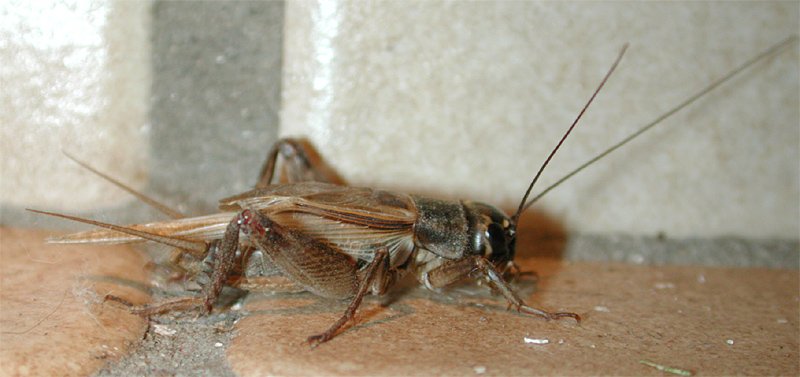
The indoor roster: who is chirping (and who never does)
The house cricket — light tan-to-yellowish with dark head bands, three-quarters of an inch, the pet-store feeder species — is the classic indoor chirper: happiest at furnace-room temperatures, capable of living and even breeding indoors year-round in warm humid corners, and the author of most behind-the-appliance concerts. The field cricket — glossy black, chunkier — is the fall walk-in: a yard resident that follows warmth through door gaps each September–October, chirps from the garage or basement for its remaining weeks, and cannot sustain indoor generations; it is a seasonal boarder, not a tenant. The camel cricket — humpbacked, long-legged, and completely SILENT — is the basement jumper covered fully on its own page; if your “cricket problem” makes no sound and leaps at you near the sump, that is the file. Sorting matters because the programs differ: house crickets can establish (find the warm humid source), field crickets just need the door closed behind them, and camel crickets are a moisture verdict wearing legs.
Crickets arrive from the perimeter, which is where the eviction has to happen if it is going to hold. See pest control in Dayton.
How long do crickets live? The lifespan math behind the noise
The number the search wants: adult crickets live eight to ten weeks at indoor temperatures — and the full egg-to-death arc runs two to three months of nymph-hood (eight-plus molts, wingless and therefore silent) before the six-to-ten-week chirping adulthood. The consequences for your household: the individual chirper has a deadline — a lone field cricket that walked in this September dies of old age by Thanksgiving with or without your flashlight campaign; silence does not mean vacancy — nymphs are mute, so a “solved” problem can re-premiere weeks later as the next cohort fledges its wings (the house-cricket-breeding scenario); and outdoors, frost is the amnesty — Ohio’s field cricket year ends at the first hard freeze, with the species overwintering as soil-banked eggs, which is why the fall walk-in wave has a natural expiration date. The strategic read: one chirper is a patience-or-vacuum decision; chirping that persists past two months indoors means breeding, and breeding means a warm-moisture source worth finding.
Why the chirp is so hard to locate (and the hunt that works)
Every cricket hunter learns the species’ two acoustic defenses: ventriloquism — the chirp’s frequency bounces off hard surfaces so convincingly that the sound seems to move rooms when you do; and the silence reflex — crickets feel approaching footsteps through the floor and stop mid-song, restarting only after minutes of stillness. The hunt that beats both: two listeners triangulating from different doorways (phones on voice-memo work as second ears), moving only during song and freezing at silence, closing distance in the dark toward warm-appliance zones — water heater, furnace, refrigerator compressor, under-sink cabinets — where the humid warmth crickets court from concentrates ninety percent of indoor singers. Then the capture: cup-and-card for the visible, or the overnight cornmeal-baited jar trap (a spoonful in a smooth-walled jar, tipped against the baseboard) for the hidden — crickets climb in and cannot climb out. The chirp, incidentally, is males only, courting: your midnight soloist is a bachelor advertising to an audience that — in a sealed house — usually is not there.
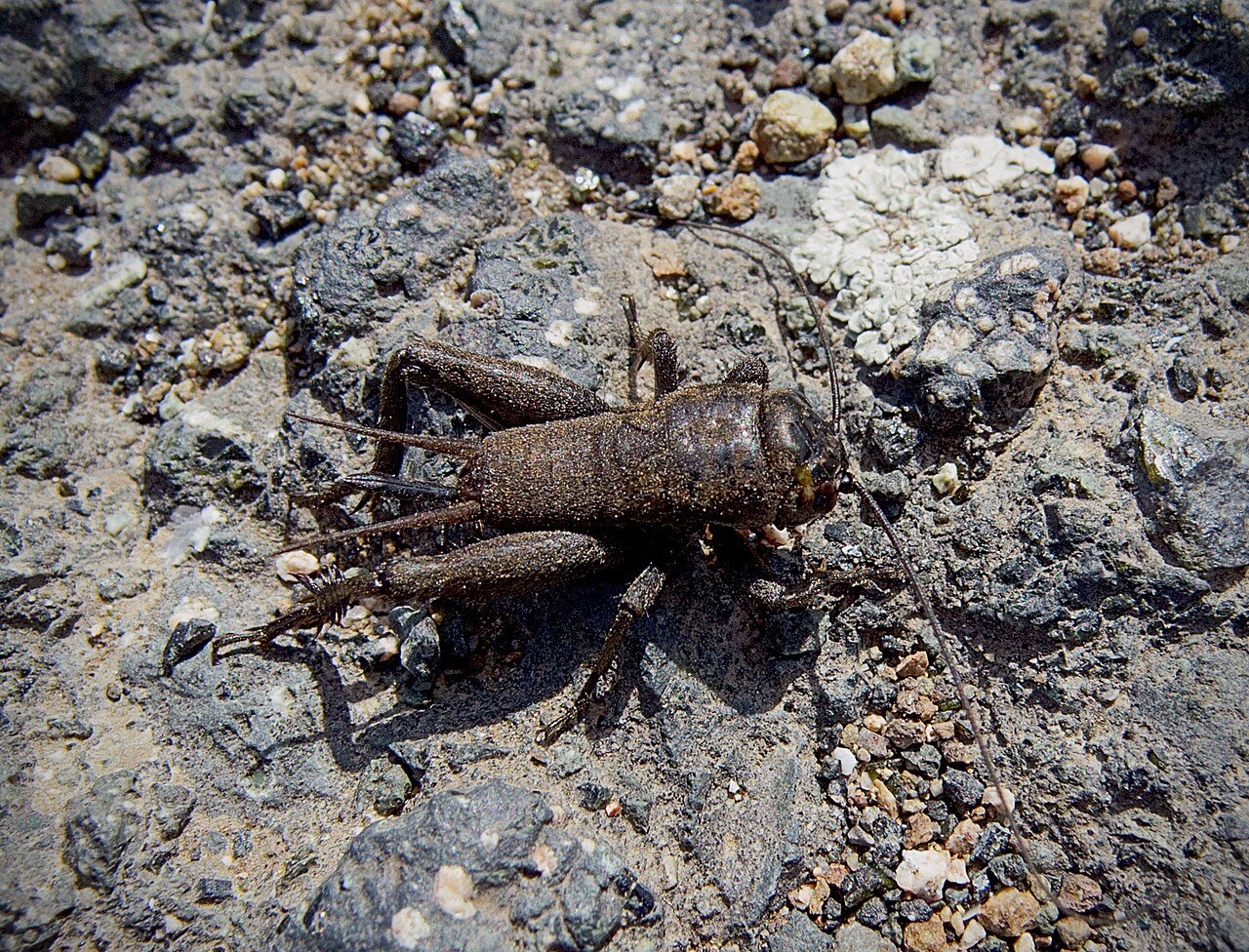
Do crickets damage anything? The honest file
Mostly no — with one narrow exception worth respect. The ordinary walk-in cricket eats crumbs and organic debris and harms nothing. The exception is established house-cricket populations and fabric: crickets at density graze surface fibers — wool, silk, linen, and notably clothing stained with food or perspiration — leaving roughened patches and small holes that get blamed on clothes moths (our moth page runs the differential: moths favor hidden seams and leave webbing; cricket grazing is surface-wide and webless). Laundry rooms and basement storage adjacent to a breeding corner supply every real case we see. Beyond fabric: paper and rubber items take occasional token damage, and the noise remains the species’ genuine offense. Grade the threat honestly — one September chirper: zero risk; months of multi-cricket sound around stored textiles: a real if modest damage file, and the eviction program below earns its keep.
The eviction program: doors, dryness, traps, and the amnesty
The same fall-defense infrastructure this library keeps building: door sweeps and garage thresholds (crickets enter at grade, overwhelmingly through the same two doors as the wolf spiders and mice), foundation-seam caulk and vent screens, amber exterior lighting — crickets are strongly light-drawn, and the white porch bulb is a nightly cricket recruitment beacon aimed at your door gap — and the moat: mulch, leaf litter, and stacked wood pulled off the foundation, since the field-cricket population staging your walk-ins lives exactly there. Indoors: dry the corners (house-cricket breeding needs humid warmth; the dehumidifier doctrine applies once more), sticky monitors along baseboards in garage and basement (census plus control), and the cornmeal jar for the audible. What stays on the shelf: indoor sprays (chasing a mobile chirper with a can is theater) and the bug bombs whose standing F this library has already engraved. And September’s secret weapon remains the calendar — seal by Labor Day and the entire walk-in season simply happens to someone else’s house.
Cricket folklore, graded
“A cricket in the house is good luck” — culturally rich (Chinese, Appalachian, and Dickensian traditions all keep hearth crickets), scientifically neutral, and household-negotiable; we respect any family that grants the September soloist amnesty on these grounds. “Crickets can tell you the temperature” — genuinely TRUE: Dolbear’s law works — count a field cricket’s chirps in fourteen seconds, add forty, and you land within a few degrees Fahrenheit; the songs slow as nights cool, which is also why the fall concert drops in tempo weekly until frost ends it. “Crickets scream when danger is near” — backwards: they SILENCE at danger (the hunt section’s whole problem). “They bite” — a handled cricket can deliver a startling but skin-safe nip; unhandled, never. The folklore file’s best entry stays the thermometer trick — the rare pest fact that makes the nuisance briefly delightful, at least until 2 a.m.
The bottom line
A cricket in the house is a deadline with a soundtrack: eight-to-ten adult weeks at most, one bachelor doing all the singing, and a hunt that yields to two listeners, a dark room, and a cornmeal jar. Field crickets are September boarders the door sweep retires; house crickets earn attention only when months of sound or fabric grazing say a warm humid corner is breeding them; and the silent basement jumper is the camel cricket’s file next door. Seal by Labor Day, dim the porch beacon, dry the corners, and the annual concert series closes for good — with the professional program on call for the persistent-breeding cases and the properties that would rather skip the flashlight hunts entirely: (937) 569-3330.
Frequently asked questions
How long do crickets live?
Adults: eight to ten weeks at indoor temperatures, after two-to-three months as silent wingless nymphs. The practical version: an individual chirper has a built-in deadline, and a lone fall walk-in dies of old age by Thanksgiving with or without your intervention.
How long do crickets live in a house?
The walk-in field cricket: its remaining weeks, no reproduction indoors. The house cricket: potentially through generations IF it finds warm humid harborage — chirping that persists past two months means breeding, and the warm-corner hunt (water heater, furnace room) becomes the real job.
Why do crickets chirp at night and how do I make it stop?
Males court after dark by scraping their wings; warmth speeds the song. End it by ending the cricket: the two-listener triangulation toward warm appliances, the cup or vacuum, or the overnight cornmeal-jar trap — and door sweeps so the next bachelor sings outside.
Do crickets fly?
House crickets can (weakly, toward lights); Ohio field crickets mostly cannot or do not; camel crickets never. Indoor arrivals are overwhelmingly pedestrian — through door gaps and thresholds at grade, which is why the sweep outranks the swatter.
What are crickets attracted to in a house?
Warmth, humidity, light at the entrances, and crumb-grade food: the porch bulb recruits them to the door, the gap admits them, and the furnace room hosts them. Amber bulbs, sweeps, and dry corners subtract all three draws.
Do crickets bite humans?
Handled ones can deliver a startling nip that rarely marks skin; unhandled crickets never approach people. The species’ genuine offenses are acoustic and — at breeding density — textile grazing; the danger file is empty.
Do crickets damage clothes?
At established-population density, yes — surface grazing on wool, silk, linen, and soiled fabrics leaves roughened patches and small holes often blamed on moths (moth damage hides in seams with webbing; cricket grazing is surface-wide and webless). One walk-in chirper: zero fabric risk.
What is the difference between house crickets, field crickets, and camel crickets?
House: tan, banded head, chirps, can breed indoors in warm humidity. Field: glossy black, fall walk-in, chirps, cannot establish inside. Camel: humpbacked, silent, jumps, basement-moisture resident with its own page. Sound plus color sorts them in seconds.
Why do crickets stop chirping when I get close?
Floor-vibration detection — they feel footsteps and silence mid-song, resuming after minutes of stillness. The hunt that wins: move only during song, freeze at silence, triangulate with a second listener, work toward the warm appliances.
When do crickets go away on their own?
Outdoors, the first hard frost ends the season (eggs overwinter in soil); indoors, individual adults age out within weeks. Persistent multi-month indoor chirping is the one pattern that will not self-resolve — that is breeding, and the warm-corner source hunt or our visit ends it: (937) 569-3330.
The eight-county cricket report
The walk-in wave tracks housing and habitat like everything else on our routes: the farm-belt counties — Miami and Preble — run the heaviest field-cricket Septembers, as harvest and frost push field populations toward every lit doorway in the villages (the same displacement calendar as the rodent surge, answered by the same Labor Day sealing); the mature suburbs — Kettering, Centerville, Oakwood — contribute the classic garage-and-basement chirper calls plus the occasional house-cricket breeding case in older utility rooms; the newer plats — Beavercreek, Springboro, Huber Heights — funnel their modest traffic through the garage-corner gap that every program on this site eventually visits; and the river towns add camel-cricket referrals from the valley basements, routed to that page’s dehumidifier doctrine. Every county shares the acoustic constant: the calls spike in the first two cool weeks of fall, taper with the chirp tempo through October, and vanish at frost — a pest season you can literally hear ending, at fourteen chirps plus forty degrees at a time.
And should tonight’s soloist outlast your patience before it outlasts its eight weeks: the jar goes down at bedtime, the cornmeal does the negotiating, and the morning delivers either a captive for the garden or a silence that needs no explanation. Every concert ends; yours just gets to pick the encore.
Fourteen chirps, plus forty, minus one bachelor — autumn, solved.
The rest of the fall-defense calendar — the sweeps, the seals, the amber bulbs — lives across this library, one September deadline shared by every walk-in on the roster.
Sleep well; the meter is running.