
“How do I get rid of wolf spiders” is usually typed within an hour of the encounter — the big, fast, hairy sprinter crossing the family room at speed, triggering every instinct evolution installed. So first, the honest frame this page is built on: wolf spiders are harmless to your household (the full acquittal lives on our wolf spiders in Ohio profile), and outdoors they are among the hardest-working pest control your property employs. What this page solves is the legitimate half of the search: wolf spiders do not belong INSIDE, the fall walk-in season is real, and a house that keeps meeting them has fixable doors. Here is the complete program — the exclusion work that actually ends indoor encounters, the habitat management that relocates the outdoor population away from your foundation, the honest grades on traps and sprays, and the response protocol for the one crossing the floor right now.
Why wolf spiders end up inside (the biology that writes the fix)
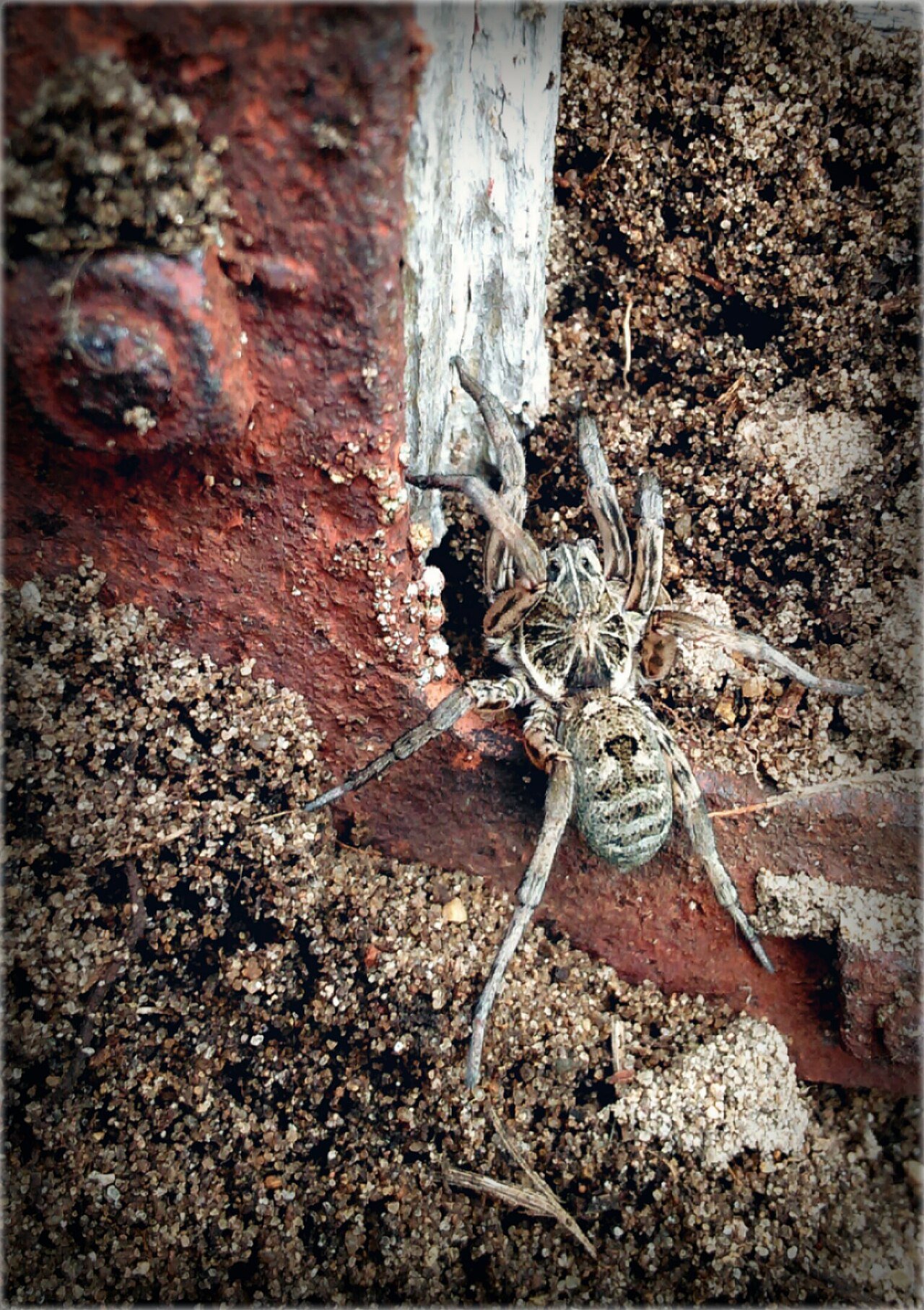
Wolf spiders are ground-hunting nomads — no webs, no anchor points, just nightly patrol routes through turf, litter, and mulch after crickets, roach scouts, and lawn insects. Indoor appearances are navigation accidents with a calendar: September and October dominate, as cooling nights push hunts closer to warm foundations and mating-season wandering peaks, and the hunters follow prey and warmth through any ground-level gap — door sweeps worn thin, garage-corner gaps, foundation-seam cracks, window wells. Two facts aim the whole program: they enter LOW (a wolf spider does not climb to second-story windows; every entrance is within inches of grade), and they do not WANT to stay — heated indoor air is desert-dry for them, prey is scarce, and most walk-ins die or exit within days. Which means this is the most solvable spider complaint on the roster: close the ground-level doors and the indoor file simply ends; no colony, no nest, no breeding population to fight — just traffic to stop.
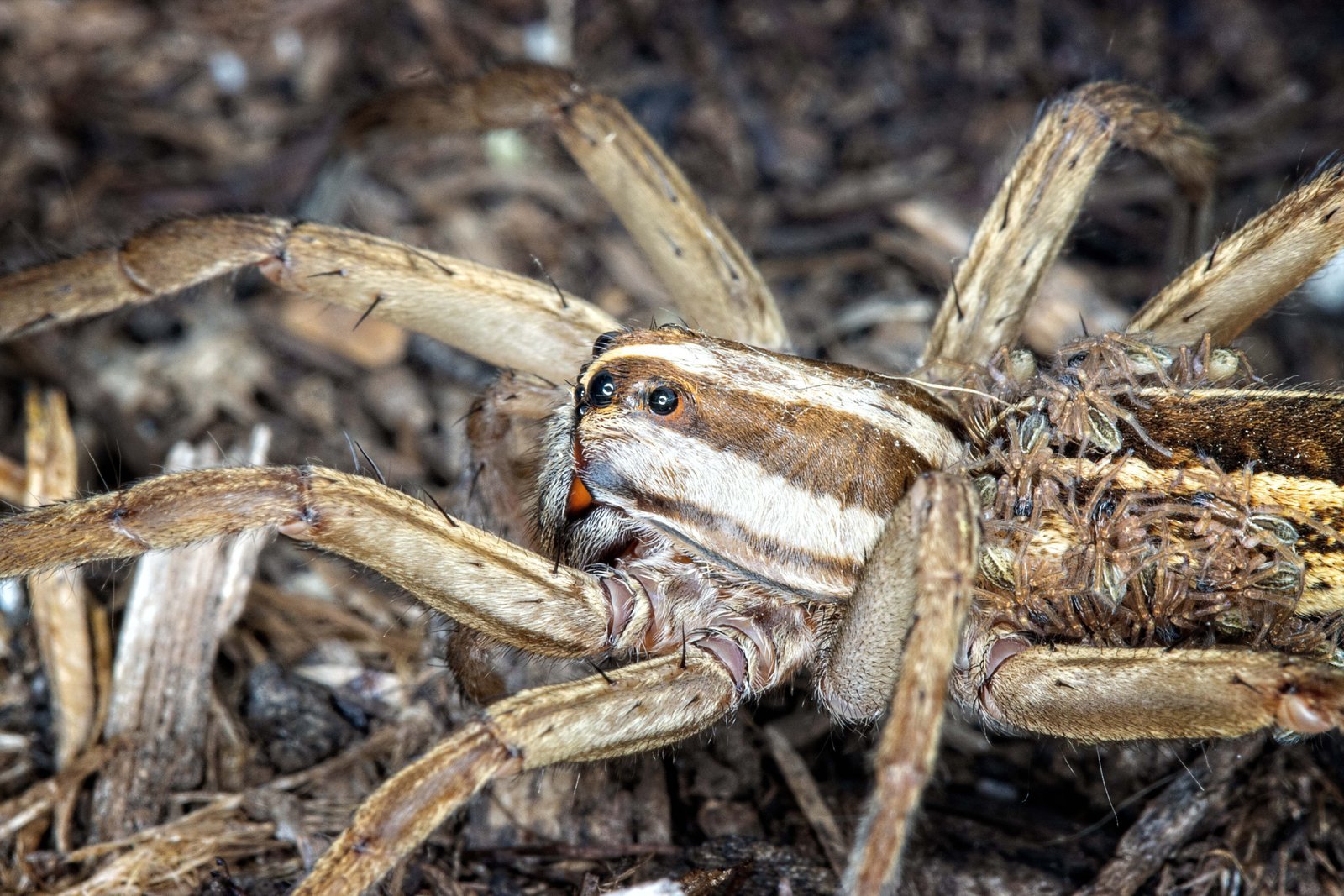
Wolf spiders hunt rather than web, so they come in following something else. Removing that something is spider control in Dayton.
The exclusion program: where wolf spider control actually happens
The high-leverage hour: door sweeps on every exterior door — daylight visible under a door is a wolf spider boulevard, and the $12 sweep is the single best purchase in this file; garage threshold and corner gaps — the number-one entrance in suburban Ohio for spiders exactly as for mice, closed by the same rodent-rated retrofit; foundation-seam caulking where siding meets sill and utilities penetrate; window well and basement-vent screening for the below-grade routes; and weatherstripping on the garage-to-house door, the most-forgotten interior boundary. Then move the outdoor staging areas back: the foundation moat — mulch, leaf litter, stacked stone, and firewood pulled back to a bare band — removes the daytime harborage wolf spiders patrol from, and amber exterior lighting thins the nightly insect buffet that draws their hunts to your walls. Every line item is shared infrastructure with the rodent, ant, and fall-invader programs — the same seams, the same September deadline, the same compounding payoff.
Traps, sprays, and repellents: the honest grades
Sticky monitors along baseboards (B+): the one product genuinely matched to the species — ground-hunters cross floors, floors hold traps, and a monitor line behind furniture and along garage walls both intercepts walk-ins and censuses your entry points (a corner that keeps catching is pointing at its gap). Perimeter residual treatment (B− for this species): exterior barrier applications help modestly — wolf spiders’ leg-height and grooming habits blunt residual pickup, which is why our spider program leads with the mechanical work and uses product where inspection earns it. Indoor spraying (D): chasing individual nomads with a can treats nothing — there is no nest to reach, and the next walk-in never met the last one. Scent repellents — peppermint, citrus, chestnuts (D): the standing grade from every spider page; hours of hesitation, zero exclusion. Ultrasonics (F): the standing F. The budget verdict: $40 of sweeps, caulk, and monitors outperforms $400 of product for this species, and it is not close.
The one on the floor right now: response protocol
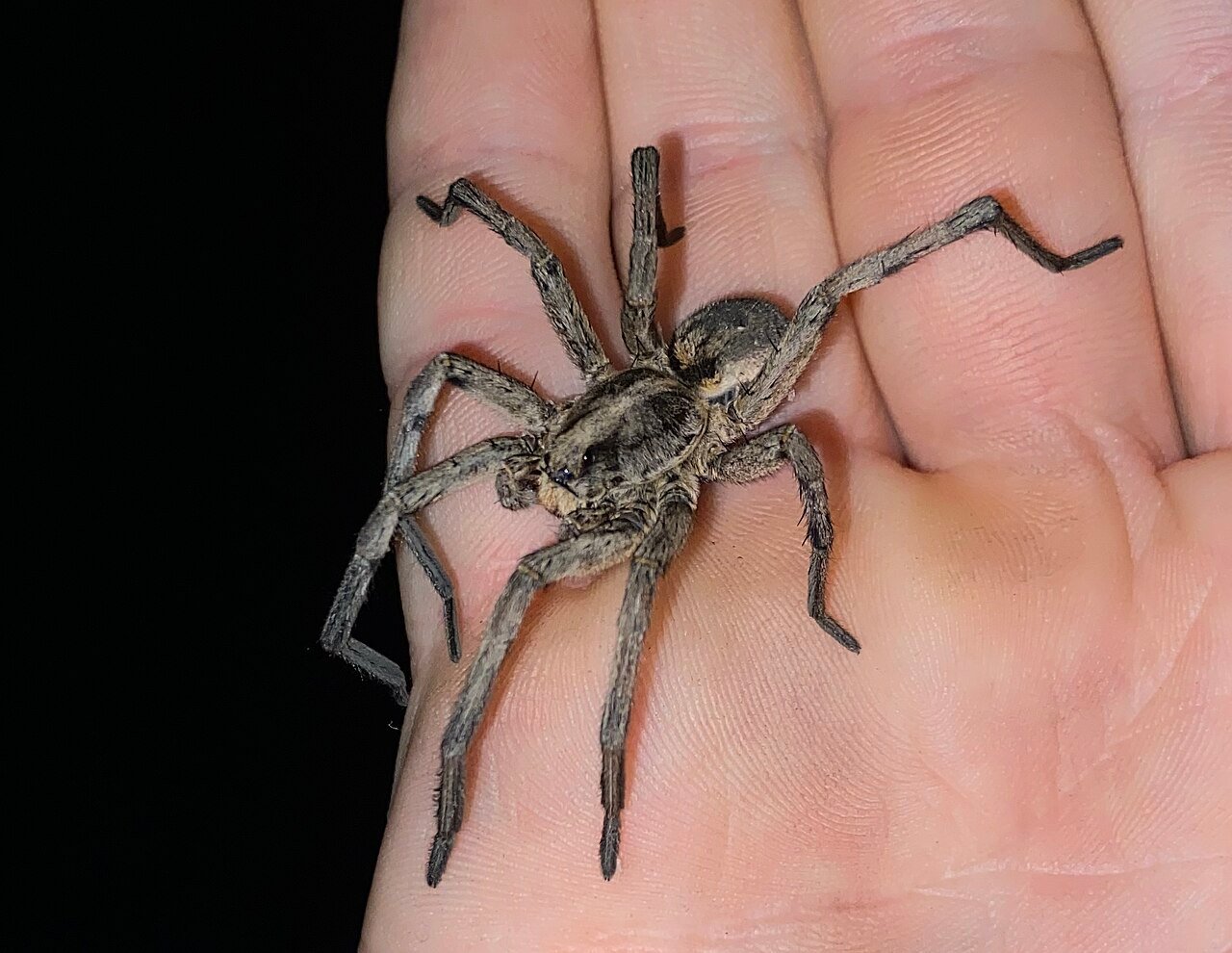
Options in order of household harmony: the cup-and-card — wolf spiders are fast but linear; herd it against a baseboard, cup, slide, escort to the yard where it resumes employment (release beats relocation drama; it will not “come back in” through a sealed house). The vacuum for the unwilling — effective and final. The one warning that earns its bold: do not smash a large autumn female — the famous back-riding brood means a squish can scatter dozens of live spiderlings across the carpet, converting one spider into a memorable evening (the photo on our spider-bites page shows exactly why). Cup or vacuum, never the shoe, September through November especially. And the follow-up that converts incident into program: note WHERE it was heading or hiding — floor-level sightings map entry gaps better than any inspection, and tonight’s spider is tomorrow’s caulk line.
What NOT to do: the outdoor overkill file
The tempting wrong answer is yard-wide spraying to “get them all” — and it backfires twice. First, the target is wrong: your lawn’s wolf spider population is the night shift suppressing crickets, lawn moths, and the roach scouts this library spends whole pages fighting; broadcast insecticide fires your unpaid staff and invites the prey rebound. Second, the vacancy refills — ground hunters recolonize treated turf from every property line within weeks, so the spray buys a spider-free month outdoors (which you never see anyway) at the cost of the insect suppression you did benefit from. The evidence-based outdoor posture: manage the FOUNDATION BAND (the moat, the lighting, the harborage) so patrol routes bend away from the house, and leave the back-lawn population to its work. Our whole spider doctrine in one sentence: control the interface, employ the yard.
The seasonal playbook
- August: the pre-season hour — sweeps, thresholds, caulk, and moat, finished before the September wander begins; the same Labor Day deadline as every fall-defense program on this site.
- September–October: peak walk-in season — monitor lines active along garage and basement walls, amber bulbs on, cup-and-card on standby, and every floor-level sighting logged as entry-point intelligence.
- November: stragglers fade as the outdoor population banks its eggs or ends with the season; pull the year’s monitor data — the catch map IS next August’s caulk list.
- December–February: quiet — the odd basement wanderer follows the winter-spiders playbook; the garage stays the halfway house worth a monthly glance.
- March–July: outdoor season — the lawn’s hunters work unseen and unbothered; the only summer task is keeping the moat raked and the lighting amber. Indoor encounters in high summer are rare enough to treat as gap alarms.
When the program is ours to run
Call (937) 569-3330 when: floor-level walk-ins persist AFTER an honest sealing pass (the professional exclusion audit finds the gaps homeowner flashlights miss — brick-veneer weeps, sill-plate seams, under-stoop routes); the spider volume signals a prey boom worth diagnosing (wolf spiders following food is a census, and the food is the real client); the household includes someone whose arachnophobia makes DIY genuinely unworkable (a legitimate service call we take seriously and without commentary); or the encounters are actually in the two-careful-species zone — storage-room suspects get the venomous-spiders protocol, not the wolf acquittal. The Protection Plan folds all of it into the standing rhythm: fall exclusion review, monitor maintenance, perimeter product where inspection warrants, and the free re-service that covers the October surprise. And the phone triage keeps its house habit: plenty of wolf spider calls end with a sweep recommendation and no invoice at all.
The bottom line
Wolf spider control is a doors problem wearing a spider costume: seal the ground-level gaps by Labor Day, pull the moat back, dim the buffet lights, run monitor lines through the fall, and cup-and-card the stragglers — never the shoe, never the fogger, never the yard-wide purge that fires your own night shift. The indoor file ends with the caulk; the outdoor population goes back to eating crickets on your behalf; and the fastest spider in the county resumes being something you almost never see — which was always the arrangement everyone wanted.
Wolf spider or something else? The thirty-second sort
Since the program above only fits the right spider, the quick key: wolf spider — big-bodied, hairy, stout banded-or-mottled legs, ON THE FLOOR and moving fast, no web anywhere, and (under a flashlight) the two large forward headlight eyes whose reflective shine is the night-walk giveaway. Giant house spider — similar bulk but found at walls, tubs, and funnel webs, longer-legged and less furry; the basement resident, not the floor-crosser. Grass spider — smaller, racing-striped, attached to a funnel web; the September lawn tenant that wandered. Fishing spider — the wolf’s even-bigger cousin near water features and occasionally on exterior walls; same acquittal, same program. Brown recluse suspicion — wrong build entirely (slender, uniform tan, unbanded legs, six eyes) and wrong behavior (retiring storage-dweller, never the bold floor sprint); the storage-zone protocol on our venomous guide handles that file. The floor-sprinter with headlights is the wolf — run this page; the others have their own, one link away.
And the last word belongs to the brood photo everyone remembers: the spider that carries her dozens on her back is the same one clearing your lawn’s pests by the hundred each night — formidable-looking, family-minded, and better employed outside your walls than harmed inside them. Seal the doors; keep the staff.
Frequently asked questions
What gets rid of wolf spiders fast?
Indoors: the cup-and-card or vacuum for the individual, then door sweeps and ground-level caulking to end the traffic — there is no nest to treat, so exclusion IS the fast fix. A sealed house stops seeing them within the season; sprays chase nomads and change nothing.
What attracts wolf spiders into the house?
Ground-level gaps plus fall weather: cooling September nights push hunts toward warm foundations, and worn door sweeps, garage-corner gaps, and foundation seams admit the wanderers. Prey-rich, brightly-lit foundations recruit hardest — the moat and amber-bulb program thins the draw.
Do wolf spiders infest houses?
No — they are outdoor nomads whose indoor appearances are individual navigation accidents; heated dry interiors cannot sustain them and most walk-ins die or leave within days. Repeated sightings mean open doors, never a breeding population.
Should I kill a wolf spider in my house?
Cup-and-card or vacuum — but never smash a large autumn female: the spiderlings riding her back scatter alive on impact, dozens at once. Outdoors, leave them entirely; they are top-tier free pest control for crickets and lawn insects.
What do wolf spiders hate?
The folklore aisle (peppermint, citrus, chestnuts) grades D as always — brief hesitation, zero exclusion. What actually deters them: sealed thresholds, bare foundation bands, amber lighting, and reduced prey; wolf spiders follow food and cover, not scent preferences.
Where do wolf spiders hide in a house?
Ground level, always: along baseboards, under furniture and appliances, in garage corners and basement-floor clutter — never webs, never heights. Sticky monitors along those runs both catch them and map the entry gap they used.
Are wolf spiders hard to get rid of?
Easiest major spider complaint on the roster — no colony, no nest, no eggs indoors: close the ground-level doors and the encounters end. The full sealing hour (sweeps, thresholds, caulk) typically finishes the file in one weekend.
Do wolf spiders come up drains?
No — the drain trap’s water seal blocks that route; tub and sink wolf spiders climbed in for moisture and stranded on the slick walls. They entered the house at grade like every other walk-in.
When are wolf spiders most active?
Outdoors: nights, spring through fall, with the indoor walk-in peak in September–October as temperatures fall and mating-season wandering peaks. Winter sightings are rare garage-and-basement stragglers running the winter-spiders playbook.
Does professional treatment work for wolf spiders?
The professional version is exclusion-led — the audit that finds brick-weep and sill-seam gaps homeowners miss, monitor programs, and perimeter product only where inspection earns it. Companies selling routine indoor sprays for a nomad species are selling theater; ours will tell you so on the phone: (937) 569-3330.
Doors sealed, monitors down, staff retained — the fastest spider in the county, managed at walking pace.