Every summer a wave of alarmed posts sweeps Ohio’s neighborhood groups: someone finds a dark, long-legged bug on the porch, a search result mentions “kissing bugs” and Chagas disease, and by evening half the street is examining its window sills. Here’s the page we wish everyone found first. Yes, a kissing bug species is genuinely documented in Ohio. No, the bug on your porch almost certainly isn’t it — the overwhelming majority of Ohio “kissing bug” reports turn out to be one of three harmless or even beneficial look-alikes. And the actual health risk in Ohio, even in the rare genuine encounter, is vanishingly small for reasons this guide explains honestly. Written by the licensed team at Greater Dayton Pest & Rodent (free photo identification, always — it’s most of what this topic needs), this is the complete Ohio kissing bug reality check: what the real one is, what people actually find, and the short list of situations that genuinely deserve action.
The real thing: Ohio’s one kissing bug species
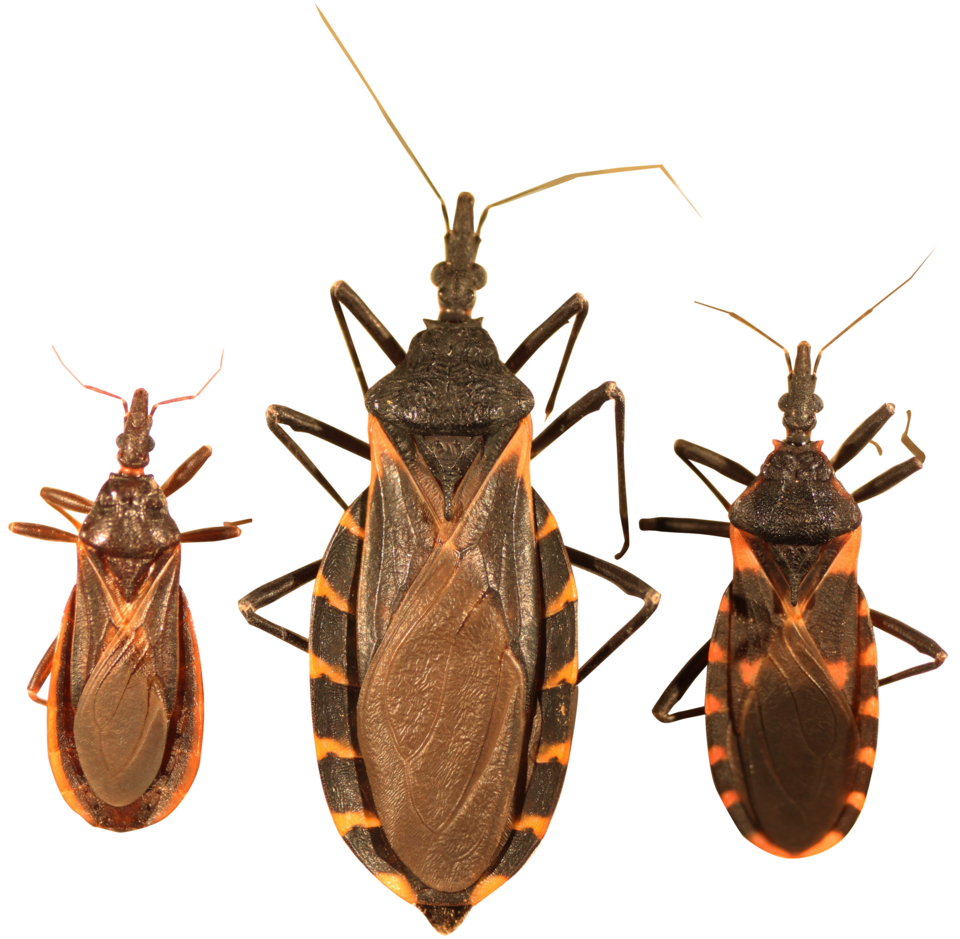
Kissing bugs are triatomines — blood-feeding assassin bugs — and one species, the eastern bloodsucking conenose (Triatoma sanguisuga), reaches its range’s northern edge in southern Ohio. It’s a substantial insect, three-quarters of an inch to an inch, flat and dark brown-black, with the family’s signature features: a narrow, cone-shaped head with a straight, slender beak folded beneath it, long antennae attached at the sides of the cone, and a broad abdomen whose flared edges show a row of orange-to-reddish bands. The “kissing” name comes from its feeding habit — it takes blood meals from sleeping mammals, sometimes near the face — and its natural Ohio life is spent not in bedrooms but in wildlife nests: raccoon dens, opossum burrows, wood rat middens, chicken coops, and brush piles. Documented Ohio specimens are genuinely uncommon, concentrated in the state’s southern counties, and encounters typically involve a single adult drawn to porch lights in midsummer rather than any indoor population. That last distinction matters more than any other fact on this page: in the states where kissing bugs are a real domestic concern, the problem is colonies living inside housing; in Ohio, the documented pattern is the stray visitor, and stray visitors are a fundamentally smaller problem.
The real risk in Ohio is very low and the look-alikes are common. If something is biting at night, that is a question for pest control in Dayton.
Chagas disease: the honest Ohio risk assessment
The fear behind every kissing bug search is Chagas disease — a parasitic infection (Trypanosoma cruzi) that triatomines can transmit, and a serious public health issue in parts of Latin America where infected bugs colonize houses by the thousand. The honest Ohio math runs through four gates, each of which cuts the risk dramatically. First, you’d need a genuine kissing bug — see the look-alike section, because most candidates fail here. Second, that bug would need to carry the parasite: infection rates in northern-edge populations are low, and the Ohio specimens tested have overwhelmingly been clean. Third, transmission doesn’t happen through the bite itself — the parasite is in the bug’s feces, and infection requires fecal material entering the bite wound, eyes, or mouth, an inefficient route that’s the main reason locally acquired human Chagas is extraordinarily rare in the United States (a handful of documented cases nationally, none established in Ohio). Fourth, even that inefficient route requires prolonged, repeated exposure of the kind that comes with infested housing, not a single porch encounter. Stack the gates and the conclusion is plain: an Ohioan’s realistic Chagas risk rounds to zero, and the CDC’s guidance reflects it. The one Ohio population with a legitimate interest: dog owners — canines in the southern U.S. contract Chagas more readily (dogs eat bugs), so kennels and outdoor dogs in southern Ohio counties are the closest thing to a local risk group, and even there the operative word is awareness, not alarm.
What Ohioans actually find: the three look-alikes
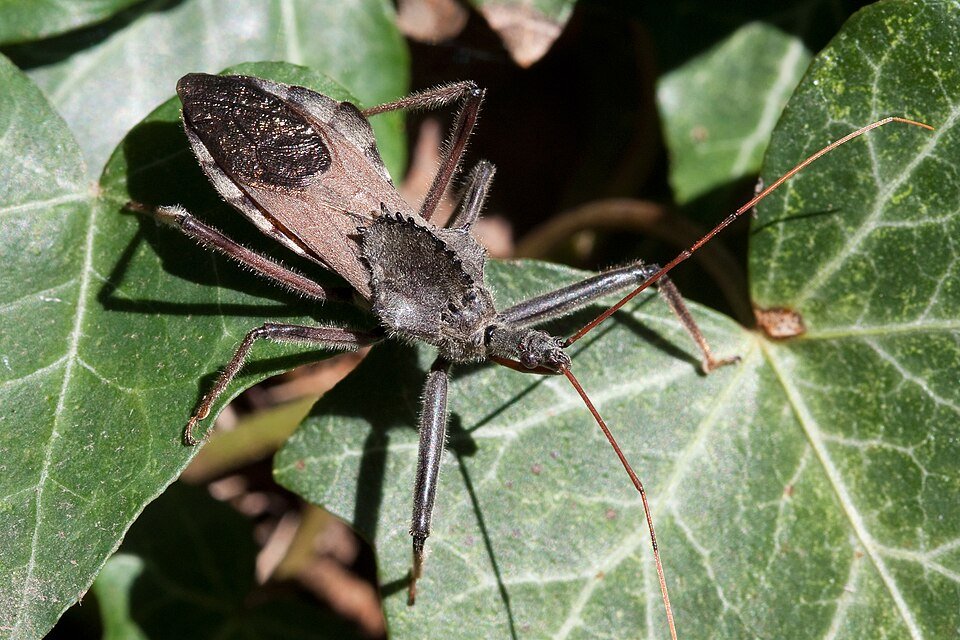
Run a summer of “is this a kissing bug?” photos through our identification line and three species account for nearly all of them. The wheel bug tops the list — a big, armored, gray assassin bug with an unmistakable cog-shaped crest on its back, and ironically one of the most beneficial predators in an Ohio garden, spearing caterpillars and beetle larvae all season. It’s a kissing bug cousin (same family, different diet) with the same beak, which is why it fools search engines — but the wheel crest settles it in one glance, and the only caution it deserves is don’t hand-grab one; its defensive stab is memorably painful, though medically trivial. The western conifer seed bug comes second, especially each fall when it enters houses exactly like the invaders on our fall invader page: three-quarters of an inch, brown, with flattened leaf-like flares on its hind legs and a habit of buzzing clumsily around lamps. It feeds on pine seeds, bothers nobody, and overwinters in wall voids — annoying, harmless, and the single most common autumn “kissing bug” false alarm in the Miami Valley. The masked hunter rounds out the trio: a slim, dark indoor assassin bug whose nymphs camouflage themselves in dust and lint (the “masked” part). It actually hunts bed bugs and other indoor insects, bites humans only when pressed against skin, and — being a dark, beaked, indoor-dwelling assassin bug — matches the kissing bug search-image almost perfectly. Boxelder bugs, stink bugs, and leaf-footed bugs mop up the remaining misidentifications. The pattern worth internalizing: cone head plus orange-banded abdomen plus blood-feeding habitat, or it isn’t a kissing bug.
The five-point identification check
- Head shape: a true kissing bug’s head is a long narrow cone with eyes bulging at the sides — wheel bugs add the crest, seed bugs have a broader head, masked hunters are slimmer overall
- Abdomen edge: look for the flat flared margin with orange/reddish rectangular bands — solid brown edges point to seed bugs, solid gray to wheel bugs
- Legs: kissing bug legs are slender and plain — leaf-like flags on the hind legs mean western conifer seed bug, every time
- Behavior: found near wildlife nesting (coops, dens, brush) or at lights on summer nights fits; marching across your ceiling in November fits the seed bug story instead
- When in doubt, don’t crush it: pot it under a glass, photograph it next to a coin, and text us — free ID, usually within the hour, and if it’s genuinely suspicious we’ll tell you exactly what to do with the specimen
The situations that genuinely deserve action
Reassurance is most of this page, but not all of it — here’s the short list where kissing bugs earn real attention in Ohio. A confirmed specimen indoors, especially in a bedroom: preserve it (sealed bag, don’t touch bare-handed), note the location, and call — a genuine indoor find warrants an inspection of the classic harborage points (bedrooms, pet sleeping areas, attics and crawlspaces with wildlife history) even though established indoor populations remain undocumented here. Wildlife-adjacent structures: chicken coops, dog kennels with outdoor runs, and homes with active raccoon or opossum denning underneath sit closest to the bug’s actual Ohio habitat — our wildlife-exclusion and den-closure work (the same service that follows every raccoon referral) is the meaningful prevention. Southern-county rural properties with dogs sleeping outdoors: worth the awareness conversation with your vet, and worth the porch-light and exclusion measures below. In all three cases the response is measured — inspection, exclusion, habitat management — not panic treatment, because the evidence base for Ohio supports vigilance at exactly that temperature and no hotter.
Prevention: the same envelope that stops everything else
Because Ohio’s kissing bug exposure is the stray adult drawn to light and slipping through gaps, prevention is a subset of the exclusion program running through this whole site. Exterior lighting leads: kissing bugs are strongly light-attracted night fliers, so the warm-spectrum (2700K or amber) porch and flood bulbs we recommend against spiders and fall invaders cut this risk with the same twist of the wrist. The envelope follows: door sweeps, screened and sealed windows (bedroom screens especially — repair every tear before July), sealed utility penetrations, chimney caps, and screened attic and crawl vents. Habitat management finishes it: brush piles and wood stacks away from the house, wildlife denning under decks and outbuildings resolved promptly (the raccoon under the porch is the actual kissing bug habitat on your property), and coops and kennels kept sealed, lit warm, and inspected seasonally. Families in the southern counties can add bed nets for outdoor sleeping (camping, screened porches) if it buys peace of mind. Notice what’s absent: routine preventive spraying, which the risk level simply doesn’t justify — and any company selling scheduled “kissing bug treatments” to Ohio households is selling the fear, not the biology.
Kissing bug questions, answered at Ohio temperature
I woke up with bites around my mouth. Kissing bugs?
Almost certainly not — facial bites overnight in Ohio are overwhelmingly bed bugs, mosquitoes, or (commonly) not bites at all. Kissing bug feeding is rare here and doesn’t reliably target faces despite the name. The productive move is a bed bug inspection of the mattress seams and headboard — that’s the common problem wearing the exotic costume, and the one worth ruling out this week.
Found one in my dog’s kennel. Now what?
Bag it, photo it, send it — and if it verifies, we treat the kennel situation seriously: harborage inspection, exclusion of the run and sleeping structure, wildlife-den survey nearby, lighting changes, and a vet conversation about canine Chagas awareness. This is the one Ohio scenario where the full protocol earns its keep, and it’s still an inspection-first protocol, not a spray-first one.
Are they spreading north with the climate?
Range edges do drift, and triatomine records have crept northward over decades — it’s fair to expect Ohio encounters to remain rare but not to assume they’ll grow rarer. That’s an argument for exactly what this page prescribes: cheap standing exclusion, free identification, and zero panic. If the picture ever changes materially, this page will change with it; that’s the maintenance promise behind everything we publish.
Who do I even call about this — a doctor or an exterminator?
For the bug: us, starting with the free photo ID at (937) 569-3330. For a suspected exposure — a confirmed bug found in bedding plus a bite plus any symptoms — your physician, mentioning Chagas so testing can be considered; it’s readily diagnosable and treatable when caught. For the property questions in between (dens, coops, exclusion), that’s the inspection we do every week under a dozen other pest names. Ohio’s kissing bug story is, in the end, a small story — and keeping it small is mostly a matter of porch bulbs, caulk, and knowing what you’re actually looking at.
Why the panic cycle happens — and how to be the calm neighbor
The kissing bug scare follows the same script every Ohio summer, and understanding the script is half the vaccine. A national story runs (usually from Texas or the Southwest, where the bugs genuinely colonize housing), the coverage includes a range map with Ohio shaded at the faint northern edge, someone local finds a wheel bug or seed bug the same week, and the neighborhood group does the rest. Nothing in the cycle is dishonest — the species is real, the disease is real, the map is real — but every step drops the quantifiers that carry the actual meaning: rare in Ohio, southern counties, wildlife habitat, inefficient transmission, zero established local cases. When the cycle reaches your feed, you now own the antidote: ask for the photo, check the cone-and-bands, name the wheel bug when it’s a wheel bug (it usually is), and link the actual math. Local pest companies see the same cycle from the other side — our July identification line fills with these photos — and we’d rather spend that energy the way this page does than sell a single fear-based treatment. The bugs that genuinely threaten Miami Valley households in any given week are the bed bugs, German roaches, and wall-void yellowjackets a few pages over; the kissing bug’s job in Ohio, most summers, is teaching everyone what a wheel bug looks like.
The one-page summary to screenshot
- Ohio has exactly one documented kissing bug species — the eastern bloodsucking conenose — rare, mostly southern counties, living in wildlife nests rather than houses
- Identification = cone-shaped head + orange-banded flat abdomen edge + plain slender legs; wheel bugs (cog crest), western conifer seed bugs (leaf-flag legs), and masked hunters account for nearly all reported “kissing bugs” here
- Chagas risk in Ohio rounds to zero: rare bug × low infection rate × inefficient fecal transmission × no established indoor populations; dogs in southern rural counties are the only group meriting even mild vigilance
- Genuine indoor find: bag it, don’t crush it, photo to (937) 569-3330 — free ID, and a real specimen earns a real inspection of bedrooms, pet areas, and wildlife-adjacent spaces
- Prevention is the standard envelope: warm-spectrum exterior lighting, sealed screens and sweeps, wildlife dens resolved, brush stored away — no preventive spraying justified
- Overnight facial bites = check for bed bugs first; that’s the common Ohio explanation wearing this page’s costume
Keep the checklist, share it when the summer cycle spins up, and put the identification line in your contacts for everything six-legged and suspicious — kissing bug or otherwise, the first photo is always free, and the honest answer usually costs even less: nothing but the relief.
For the record: what the authorities actually say
Because this topic attracts more secondhand summary than primary reading, here’s where the authoritative trail leads for anyone who wants it. The CDC’s triatomine pages document the U.S. species distribution (eleven species nationally, with Ohio at the faint northern margin of two ranges), the fecal-route transmission mechanism, and the count of locally acquired U.S. cases — small enough to list individually. Ohio State University Extension’s entomology fact sheets cover Triatoma sanguisuga’s in-state status and the look-alike species, and university insect diagnostic labs (OSU’s C. Wayne Ellett Plant and Pest Diagnostic Clinic among them) accept physical specimens when a find genuinely needs expert confirmation beyond a photo. Texas A&M’s kissing bug citizen-science program — the national clearinghouse for submitted specimens — publishes the state-by-state data that keeps the range maps honest. None of these sources supports panic in Ohio, and all of them support exactly the posture this page takes: identify carefully, exclude cheaply, escalate the rare genuine find, and spend your actual pest-control attention on the species that spend theirs on you. That’s the standard we hold every page on this site to — evidence first, invoices second — and it’s why the identification line stays free: (937) 569-3330, photos welcome, wheel bugs cheerfully exonerated daily.
Frequently asked questions
Are kissing bugs in Ohio?
Rarely and marginally — one native species (Triatoma sanguisuga) reaches southern Ohio at the very edge of its range, in low numbers, mostly in wildlife nests rather than homes. The dramatic kissing bug problem of the Southwest and Latin America does not exist here; the look-alike reports vastly outnumber the real ones.
What bugs are mistaken for kissing bugs in Ohio?
The weekly lineup: the western conifer seed bug (the number-one false alarm — a harmless fall invader), boxelder bugs, assassin bugs like the wheel bug and masked hunter, and stink bugs at a squint. The distinguishing marks: kissing bugs have a cone-shaped head, slender straight beak, and orange-striped abdomen edges.
What is Chagas disease and should Ohioans worry?
The parasite kissing bugs can carry — a serious disease in Latin America, vanishingly rare as locally-acquired U.S. infection, with zero documented Ohio-acquired human cases. The realistic Ohio concern rounds to zero; awareness beats anxiety.
What should I do if I think I found a kissing bug?
Do not touch it barehanded — trap it under a glass, photograph it, and send us the image (or bag it for your county health department). Genuine finds are reportable-grade interesting; the overwhelming verdict, delivered happily, is “conifer seed bug, carry on.”
Do kissing bug look-alikes bite?
The assassin-bug cousins deliver memorable defensive pokes when handled (the wheel bug ranks among Ohio’s most painful insect bites; the masked hunter earned its indoor reputation) — but none feed on blood or carry Chagas, and none seek people. Handle the whole family with a cup, not fingers.
What attracts kissing bugs to houses in range?
Lights at night, plus hosts: wildlife nesting (raccoon, opossum, rodent) in or under structures — the bugs follow the blood meals. The Ohio-practical version: exterior lighting discipline and the same exclusion-and-wildlife-hygiene program every other page recommends.
What does a kissing bug bite look like?
Painless bites clustered on the face and around the mouth and eyes (the name’s origin), delivered during sleep, often multiple — but in Ohio, facial bite clusters have likelier explanations (spider folklore aside: think mites, other true bugs, or dermatology). The bite pattern alone convicts nothing this far north.
How do I keep kissing bugs (and look-alikes) out?
The universal fall-invader defense: sealed gaps, screened vents, door sweeps, amber exterior lights — plus wildlife exclusion so nothing nests in the eaves feeding anything. One program covers the rare real thing and the common impostors alike.
Are kissing bugs spreading north with climate change?
The range models creep northward over decades — monitoring continues, and documented finds get mapped by health authorities (part of why we photograph and report genuine ones). For this generation of Ohio homeowners, the answer remains: edge-range rarity, not emerging threat.
Who identifies suspected kissing bugs near Dayton?
Text the photo: (937) 569-3330 — free same-day ID, the conifer-seed-bug reassurance delivered with genuine cheer, and the protocol (documentation, health-department routing, wildlife-source inspection) on the rare day the ID goes the other way.