
You want the mice gone, and you don’t want to hurt them. That combination gets treated as naive by half the pest control industry and as a sales opportunity by the other half — and both halves are wrong, because the most humane approach to a mouse problem is also, by a comfortable margin, the most effective one. It just isn’t the one in the trap aisle. This guide lays out the honest hierarchy: why exclusion — sealing mice out and letting the ones inside leave or be released — beats every kill method on both ethics and results, how to run a live-capture program that doesn’t quietly kill mice anyway (most DIY live-trapping does, and we’ll show you where it goes wrong), what the research actually says about relocation survival, and where the humane line honestly sits when an infestation has outrun gentle options. It’s written by a pest control company whose rodent program has been exclusion-first since the day it started — not because it markets well, but because killing mice forever at a house that keeps admitting new ones is a subscription, and sealing the house is a solution.
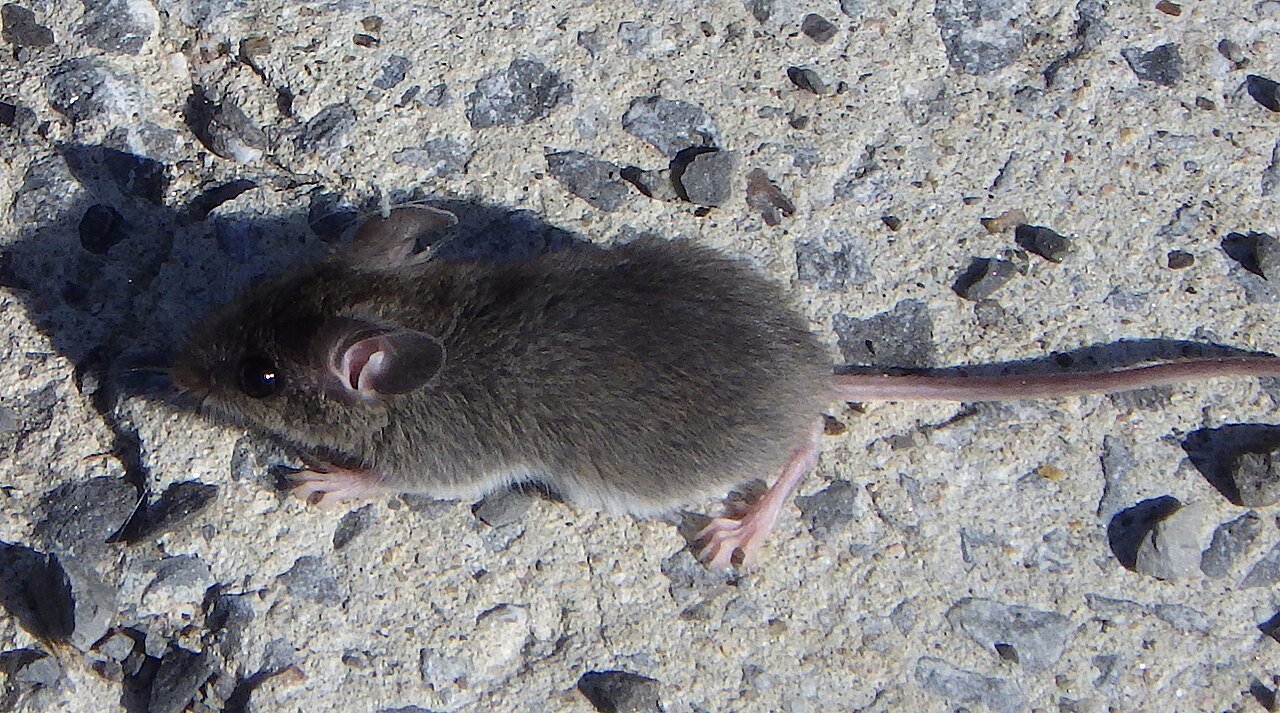
The uncomfortable truth about “normal” mouse control
Start with why the standard playbook deserves your skepticism on purely practical grounds. Snap traps kill individuals; they do not address the population, because a house that one mouse family found stays findable — the entry gaps, the warmth signature, the food access are all still there, and the scent trails mice leave literally advertise the route. Poison is worse on every axis: it kills slowly and painfully over days (anticoagulants cause internal bleeding; the mouse dies dehydrated and disoriented), it kills off-target — owls, hawks and foxes that eat poisoned mice accumulate the toxin, and rodenticide residues now show up in a large share of tested birds of prey — and it produces dead mice inside your walls, which is how a kill program becomes an odor program. Glue boards are the industry’s ethical low point: a stuck mouse dies of exhaustion and dehydration over hours to days, which is why several countries have banned them outright and why we have never deployed one. None of this is sentimentality. It’s an engineering observation: every kill method treats the symptom — this mouse — while leaving the system — a house that admits mice — fully operational. The humane option and the permanent option turn out to be the same option.
Exclusion: the most humane thing ever done to a mouse
The kindest interaction a mouse can have with your house is not getting in. Exclusion — finding and sealing every entry a mouse can use — prevents the entire moral problem from occurring: no trap decisions, no orphaned litters, no poisoned owls, just a building that reads as solid rock to a whiskered nose. A mouse needs only a gap the width of a dime, and the average older Ohio home offers dozens: the gap where the sill plate meets stone, the oversized hole around the AC line set, dryer and furnace vents with broken flaps, garage door corners, the bay-window cantilever. Our twelve-doors inspection maps them; copper mesh, hardware cloth and sealants close them; and the work is guaranteed against re-entry — if a mouse gets back through our seal, the return visit is free, plan or no plan. Done in the right order (more on timing below), exclusion is a one-time project that ends both the killing and the problem, which is why it’s the spine of our entire mouse methodology and the first thing we quote at any house that asks for “the humane option.” The humane option is a sealed house.
Live trapping that actually stays humane
Live-catch traps — the tilting-tunnel style, the multi-catch metal boxes — are the right tool for clearing the mice already inside a house being sealed. But here is the part the packaging never says: most DIY live-trapping kills mice anyway, just slowly. A mouse’s metabolism runs so hot that it can die of stress and starvation within twelve to twenty-four hours of capture; a live trap checked “every couple days” is a slow kill trap with better branding. Run it properly and it genuinely is humane: check traps every morning, without exception — set them at night, check at breakfast. Bait for success: peanut butter or chocolate spread smeared at the far end; mice can’t resist fat and sugar. Placement beats quantity: along walls, behind the stove, under the sink — wherever the droppings are freshest, because mice are creatures of edge and habit. Wear gloves handling occupied traps, both for your safety and to keep human scent off equipment. And never live-trap in freezing weather for release the same night — a winter release without shelter is a death sentence wearing a kindness costume; winter programs need the release timing built around thaws, or they need to be honest about what they are.
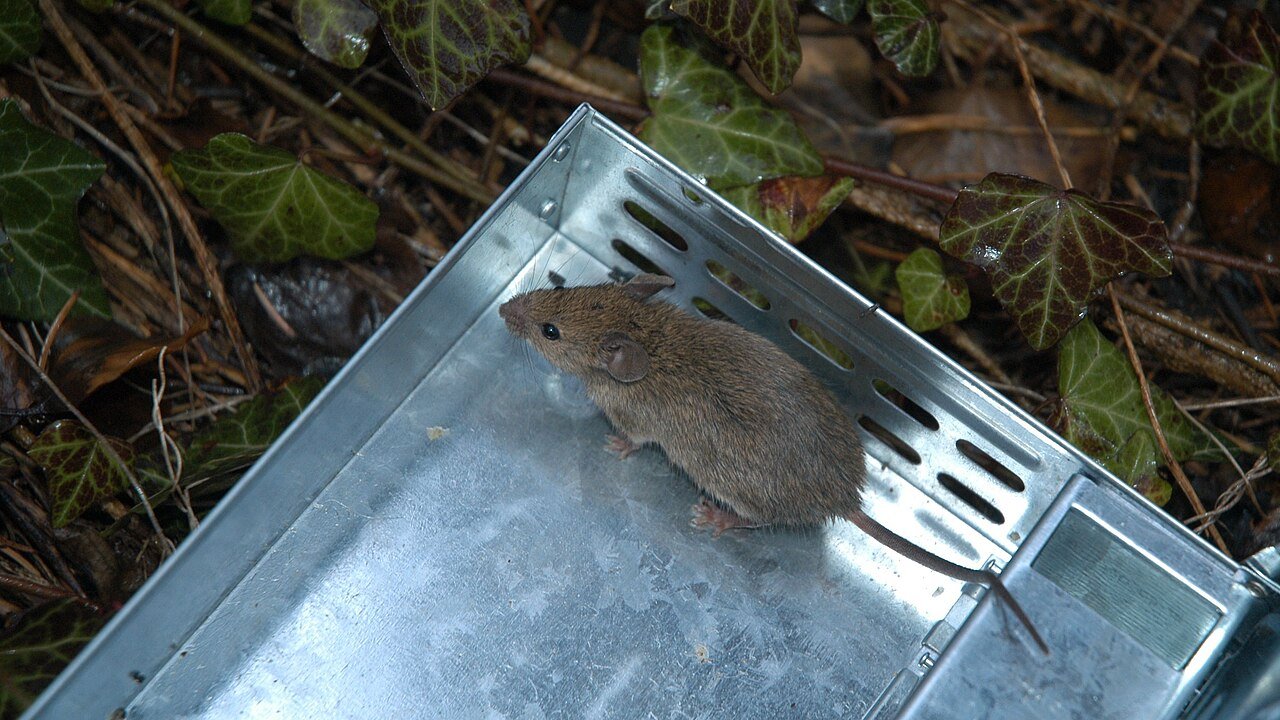
The relocation problem nobody mentions
Where you release a live-trapped mouse decides whether the exercise was humane at all, and the research here is genuinely sobering. House mice are commensal — evolved to live with humans — and a house mouse released into a distant woodlot is an unemployed specialist in hostile territory: studies of small-mammal relocation put survival rates for long-distance releases dismally low, with most animals dead within days from predation, exposure or resident-rodent competition. The practical guidance that follows: release close but sealed-out — a few hundred yards is plenty if your house is excluded (they can’t re-enter what’s sealed, and near territory is survivable territory), or at most a mile or two to a brushy field edge, stone wall or outbuilding-rich margin with real cover and forage. Release in early evening, near cover, never mid-winter, never into open mowed parkland. And notice the dependency: humane release only works when exclusion came first. Without sealing, near release means re-entry tomorrow; with sealing, near release is the most survivable option there is. The order of operations is the ethics.
The humane program, step by step
- Week 1 — Find everything: full-perimeter inspection (the twelve doors), attic and basement evidence mapping, droppings dated by freshness — you need to know how many mice and how they’re commuting before touching a trap.
- Week 1 — Cut the buffet: pet food into sealed bins and picked up overnight, birdseed off the garage floor, pantry vulnerables into glass or steel — a hungry mouse is a trappable mouse, and food discipline halves the timeline.
- Weeks 1–2 — Seal all but one door: close every confirmed entry except the single most-used one; mice must keep commuting through a known point instead of being sealed inside walls (the classic exclusion mistake this ordering prevents).
- Weeks 2–3 — Trap the residents: live traps on the checked-every-morning protocol along active runways; captures released nearby per the relocation rules above; counts logged so you know when the house runs empty.
- Week 3 — Close the last door: two to three consecutive empty-trap mornings plus no fresh droppings = the house is vacant; the final entry gets its copper mesh and sealant, and the building is done admitting mice.
- After — Verify: a monitoring period with a couple of stations confirms silence; any new evidence means a missed entry, which the workmanship guarantee covers — re-entry through our seal is a free return visit.
That sequence — inspect, deprive, seal-except-one, clear, close, verify — is the entire humane methodology, and it is precisely what our rodent control program executes. Notice what it never requires: a drop of poison, a glue board, or a decision about which animal deserves to die. It requires craft, patience and a ladder, which is why companies selling monthly bait-station subscriptions rarely lead with it.
Deterrents and repellents, graded honestly
The humane-control aisle is full of products that let you feel proactive without inconveniencing a single mouse, so here is the same honest grading we give every DIY shelf. Peppermint oil and scent repellents: mice notice, then habituate; our full breakdown at what smells do mice hate lands where the research does — a mild, temporary nudge, never a control method, though fresh cotton-ball deployments can slightly bias a mouse toward using the one door you left open during a seal-out, which is the only tactical use we’ve ever found for it. Ultrasonic plug-ins: the same verdict every controlled test reaches — brief novelty response, then mice nesting happily beside the device; save the outlet. Steel wool alone: the internet’s favorite — and yes, mice won’t chew through it, but plain steel wool rusts, shrinks and falls out of gaps within a season; the professional version is copper mesh packed tight and capped with sealant, which neither rusts nor relaxes. Cats: genuinely lethal to individual mice (which makes them a strange fit for a humane program) and genuinely irrelevant to populations — plus indoor mice quickly learn cat-free zones. The one deterrent that fully works: a sealed building with no food on offer. Everything else is a percentage; that one is arithmetic.
Where the humane line honestly sits
A trustworthy guide owes you the hard part. There are situations where pure live-and-release stops being the responsible choice: an established multi-generation infestation in an occupied home (droppings in every room, walls audibly busy at night) is a health matter — mouse allergens are a documented asthma trigger in children, and mice can carry salmonella and hantavirus (the deer mouse, Ohio’s countryside cousin, is the hantavirus species of note — handle any rural cleanup with the respirator protocols our main mouse guide details). At that population scale, live traps checked daily cannot outpace breeding — a female weans a litter every month — and prolonging the removal prolongs both the health exposure and, frankly, the total suffering. Our practice in those cases: exclusion still leads, food discipline still leads, and where population knockdown is unavoidable we use quick-kill snap traps — instant, targeted, no poison in the food chain, no wall-void die-offs — while refusing glue boards and treating rodenticide as a last resort for scale problems, placed in tamper-proof stations, never as a first move. “Humane” at that point means minimizing total harm honestly, not performing gentleness while a population grows. We’ll always tell you which situation your house is actually in — that’s the free inspection talking, not a brochure.
Humane mouse questions, answered straight
Is catch-and-release actually legal in Ohio?
For house mice, yes — they’re an unprotected commensal species and same-property or nearby release is unregulated in practice. The nuance arrives with other wildlife: relocating some Ohio wild animals off your property (raccoons and skunks most famously, due to rabies-vector rules) is restricted, which is one of several reasons a “mouse” problem that turns out to be a flying-squirrel or chipmunk problem changes the legal playbook. Identification first — always.
Won’t the released mice just come back?
An unsealed house: yes, often within the night — mice home reliably from several hundred yards. A sealed house: they can’t, and near release becomes the humane best case. This is the whole argument in two sentences: exclusion is what converts release from theater into a solution.
What about mouse babies in the nest during a seal-out?
The seal-all-but-one-door protocol exists exactly for this: the active entry stays open while trapping clears the residents, so a nursing female is never walled off from her litter. If a nest with pups is found during inspection, we wait it out or relocate the family unit together — pups travel in the nest material, mother follows scent to a nearby release box. It adds days and it’s non-negotiable; sealing a nursing litter into a wall is both cruel and, within two weeks, an odor problem that costs more than patience would have.
How long does the humane way take compared to poison?
Honestly: two to four weeks against poison’s promised one — except poison’s week one repeats every season forever at an unsealed house, plus wall-void carcasses at intervals. The humane program is slower once and finished; that trade wins for almost everyone who sees it stated plainly.
The seasonal reality: when humane is easiest
Timing changes the difficulty of doing this kindly, and the calendar favors the prepared. Late summer through September is the golden window: the fall intrusion hasn’t started (mice are still field-fat and outdoors), so exclusion work happens on an empty house — no residents to clear, no release decisions, the entire moral puzzle dissolved by a caulk gun in the sunshine. This is why our September anchor visit treats sealing as its centerpiece across all eight counties: the cheapest, kindest mouse program is the one that finishes before the first frost sends the field mice shopping for foundations. October through December is intrusion season — the full protocol above, run while the population is still small and traceable; a two-mouse November problem is a forty-mouse February problem left alone, and small populations are where live methods shine. Deep winter constrains release ethics (thaw-day timing, sheltered release sites) and argues for patience with the one-door phase. Spring reveals what winter hid — and is the season to verify, clean up droppings safely, and book the September seal that ends the cycle for good. Every year you seal before the rush is a year nobody — you or the mice — has a bad winter.
Gone, and kindly
Wanting mice out without wanting them dead isn’t squeamishness — it’s the position the engineering supports. Sealed buildings beat dead mice on every measure that matters: permanence, health, cost over five years, owls still flying with clean livers, and no more 6 AM trap decisions. If you want help doing it right, Greater Dayton Pest & Rodent runs exclusion-first, poison-last rodent work across Dayton and all eight counties — free inspection, photo triage by text, the twelve doors mapped and quoted honestly, and a workmanship guarantee on every seal. Call (937) 569-3330 or book online. The humane option and the permanent option are the same option — let’s build it.
A note on the “humane” label in pest control marketing
One consumer warning from inside the industry: “humane” on a pest control website is unregulated vocabulary, and it gets applied to some remarkable things — glue boards marketed as “non-toxic” (true, and beside the point), rodenticide stations called “discreet and gentle,” even “humane euthanasia” of live-trapped animals that a checked-daily protocol would have released. The questions that cut through any company’s brochure, ours included: Does your program start with exclusion, and is the sealing guaranteed? Will you use glue boards anywhere on my property? Where does poison sit in your sequence — first tool or last resort? What happens to animals caught alive? Companies doing the work answer those in one breath; companies selling a bait-station subscription change the subject to visit frequency. You now know enough to hear the difference — use it on us, use it on everyone.
Frequently asked questions
What is the most humane way to get rid of mice?
Honestly ranked: exclusion first (sealing prevents the whole dilemma), then properly-checked live traps for small early cases, then modern snap traps — which, placed right, kill instantly and rate as more humane than most alternatives. The inhumane list is glue boards, drowning, and slow poisons.
Do humane live traps really work?
For one-to-a-few early mice, yes — with the conditions that make them actually humane: checked at least twice daily (trapped mice dehydrate within hours), baited fresh, and released promptly. Set-and-forget live trapping is less humane than a snap trap.
Where should I release a live-caught mouse?
The uncomfortable truth: house mice are poor outdoor survivors, and studies show most translocated mice die within days — releases far from buildings are frequently a slower death sentence. Release into an outbuilding-free rural edge in mild weather if you must; winter releases are euthanasia with extra steps.
Are snap traps considered humane?
By animal-welfare bodies, yes — a correct strike is instantaneous, faster than any predator or poison death. Buy quality modern traps, place them per the flagship guide (wall-flush, pea of bait), and check daily; misfires come from cheap traps and bad placement.
Why are glue traps inhumane?
Trapped mice die over hours to days from exhaustion, stress, and dehydration — there is no version of the glue-board story that ends quickly. Several countries have banned them; we do not use them, full stop.
Is poison a humane option?
No — anticoagulant deaths take days, happen out of sight (often mid-wall), and extend the suffering to owls, hawks, foxes, and pets that eat poisoned mice. It fails the humane test and the practical one simultaneously.
Can I just make the mice want to leave?
The repellent fantasy — no scent, sound, or light makes an established colony abandon a heated, food-stocked building. What genuinely works without killing: starve the house (sealed food), seal the doors, and let the colony’s own economics relocate the ones not yet resident.
How does exclusion make mouse control humane?
Every gap sealed in September is a mouse that never enters, never breeds indoors, and never meets a trap — prevention is the only 100% humane rodent control that exists. It is also the most effective, which makes it the rare ethics-and-efficacy alignment.
What about catch-and-release with kids watching?
A live-trap release can be a genuinely good lesson — paired with the honest sealing work afterward, so the lesson is “we solved it kindly” rather than “we relocated it to die.” The teaching moment is the caulk gun as much as the release.
Do you offer humane-first service?
Our standard work already is: trapping over poison indoors, exclusion as the core product, no glue boards, and honest conversation about the live-trap trade-offs. Tell us your preferences when you call and the protocol adjusts: (937) 569-3330.